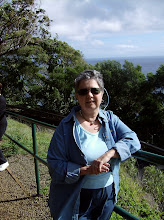
I can’t believe it’s been so long since my last posting. Perhaps it’s laziness, maybe busy-ness, and most certainly tiredness. I find myself with little time to do much else than school, work and chores. I will be glad when this part of my life is over, and I can move on to something new, or at least different.
You see, I’m in school. An odd thing for a 58 year-old to be doing, but I confess, I’m odd in many ways. I began this adventure several years ago, taking one course at a time, just testing the waters to see what going back to school might feel like. Early on, it was okay. Now, in what I seriously hope is my final semester, the thought that comes to my mind most often is, “What was I thinking?”
When school is done, I’m getting myself a new knee, a graduation present of sorts. I’ll use my rehabilitation time to study for the certification exam that must follow.
But, all this is beginning to sound like whining (and I hate whining) so, let’s move on.
What’s good about this time in my life? Well, I’m actually learning a great deal. Some of it feels very “last minute” but nonetheless, the learning is both welcomed and important. I’m also stretching myself. This is my last semester “under the wing” as they say, with a preceptor responsible for the final decisions about managing the patient’s care. That said, I’m sticking my neck out a bit (as one should), saying what I think, naming the treatment I’d advise. I’m willing to be wrong in both my diagnosis and my treatment decisions, since I know there is someone there to catch my mistakes and guide me back to better thinking. That’s what preceptors do.
I’ve been a preceptor myself on occasion. In reflection, I wonder how I did when I was on the “think through the problem; protect from error” side of the equation. My students would have been RNs mostly, people already accustomed to thinking and doing. I hope I gave them the wisdom they needed in the moment, the evidence to examine on their own and the latitude to “get it wrong” when there would be no harm. We do learn best by our mistakes. The preceptor’s role is to keep those mistakes within the confines of protecting the patient while still teaching the learner.
This final clinical semester should be done in May. I will celebrate when it is. I will celebrate more when I know I have passed my certification exam, and then with my FNP in hand, as I go out into practice I will likely return to the question of today, “What was I thinking?”
Tuesday, March 1, 2011

Wednesday, August 11, 2010
Time Passages. . .
How do you measure the concept of time? Most of us here, in the U.S.A. would say, “Silly question. We use years, months, weeks, days, hours, minutes and seconds. How else would you measure time?”
Think about it. Yes, those are common measures of time. But, don’t we also measure time in the distance between events, regardless of the exact duration? I know that I do.
Like this blog. How long has it been since I blogged here? I could look at the date/time stamp on my last entry and know precisely but in my head, it’s more like hmmmm. . . “Not since summer began, and wow, summer’s nearly gone!” That’s my measure of time, the swift passing of the season.
How long has it been since I’ve seen my best friend? Again, I pause. “Not since that conference in Raleigh which was a year ago last fall. It’s been a long time!” It’s not a precise measure. I don’t go to the calendar to measure it accurately but, it does remind me that I anchor important events to each other and track time between them thinking of the distance as “recent” or “a long time ago.”
I also measure my day, especially at work, by the number of meetings it contains. A lot of meetings equals a long day; few meetings results in an easy or quick day. Sometimes, I measure by the number of trips campus-to-campus I need to make in order to accomplish my assigned chores. Odd ways to measure time, but I notice that I do it more often than I look at my watch or track back on the calendar.
So what? It’s important to regard time, and its natural passage, as a construct we all note, but not in the same way. A family of a hospitalized teen may say, “He hasn’t looked this bad since his last hospitalization.” Admission to admission; it is how they mark time.
The problem with marking time – any way you like – is that it can be discouraging to notice that a goal you’ve set or an achievement you’d hoped to attain by now is still not in your grasp. That’s been happening to me a lot lately.
Whether it’s a new weight-loss goal not yet accomplished or a course for school that I still have not put behind me, the disappointment reminds me that I mark time by my intentions too. I’ll throw that party when I’m done with school – thinking I know when that will be. Hmmm. . .time stretches out in front of me and I’m struck by its inevitable fluidity.
I’m wondering, how does this work as I peer into the future? Time flows out in all directions and I try to steer toward certain destinations, landmarks that tell me where I am, how far I’ve come and where I need to go next. It is less about distance than about consequence; less about lasting to the goal than about learning along the way.
So today, musing about what lies ahead, the directions I’ve chosen for myself and committed to, I’m aware of how little control I have over these matter! I can only invest the effort, set out on the journey, trust the process and pay attention to what happens. Will the achievements happen “on time?” Who knows? Perhaps mine is not the ultimate time-keeping method. Perhaps there is a rhythm to it all that I cannot yet hear or feel, a coursing of the waters that moves me at will and permits me only the illusion of being in charge of my life.
Think about it. Yes, those are common measures of time. But, don’t we also measure time in the distance between events, regardless of the exact duration? I know that I do.
Like this blog. How long has it been since I blogged here? I could look at the date/time stamp on my last entry and know precisely but in my head, it’s more like hmmmm. . . “Not since summer began, and wow, summer’s nearly gone!” That’s my measure of time, the swift passing of the season.
How long has it been since I’ve seen my best friend? Again, I pause. “Not since that conference in Raleigh which was a year ago last fall. It’s been a long time!” It’s not a precise measure. I don’t go to the calendar to measure it accurately but, it does remind me that I anchor important events to each other and track time between them thinking of the distance as “recent” or “a long time ago.”
I also measure my day, especially at work, by the number of meetings it contains. A lot of meetings equals a long day; few meetings results in an easy or quick day. Sometimes, I measure by the number of trips campus-to-campus I need to make in order to accomplish my assigned chores. Odd ways to measure time, but I notice that I do it more often than I look at my watch or track back on the calendar.
So what? It’s important to regard time, and its natural passage, as a construct we all note, but not in the same way. A family of a hospitalized teen may say, “He hasn’t looked this bad since his last hospitalization.” Admission to admission; it is how they mark time.
The problem with marking time – any way you like – is that it can be discouraging to notice that a goal you’ve set or an achievement you’d hoped to attain by now is still not in your grasp. That’s been happening to me a lot lately.
Whether it’s a new weight-loss goal not yet accomplished or a course for school that I still have not put behind me, the disappointment reminds me that I mark time by my intentions too. I’ll throw that party when I’m done with school – thinking I know when that will be. Hmmm. . .time stretches out in front of me and I’m struck by its inevitable fluidity.
I’m wondering, how does this work as I peer into the future? Time flows out in all directions and I try to steer toward certain destinations, landmarks that tell me where I am, how far I’ve come and where I need to go next. It is less about distance than about consequence; less about lasting to the goal than about learning along the way.
So today, musing about what lies ahead, the directions I’ve chosen for myself and committed to, I’m aware of how little control I have over these matter! I can only invest the effort, set out on the journey, trust the process and pay attention to what happens. Will the achievements happen “on time?” Who knows? Perhaps mine is not the ultimate time-keeping method. Perhaps there is a rhythm to it all that I cannot yet hear or feel, a coursing of the waters that moves me at will and permits me only the illusion of being in charge of my life.
Monday, January 18, 2010
Six things I know for sure. . .
I just came home from a family gathering. It was not a fun, pleasant event. It was the memorial service for my brother-in-law and the first step in planning and negotiating about my sister’s future. My sister is disabled, mentally and physically; she has been all her adult life. Her injuries were acquired in her early twenties in a motor vehicle accident. She was married at the time. Most men would have fled. My brother-in-law stayed; for that he is a saint. He cared for her before she was injured, and he cared for her 24/7 after her injuries. Yet, when he died, there was no evidence of that care left.
He died while they were on vacation, in Mexico. He died without a will. He died without constructing a trust for her. He died without adding their only son (also an adult) to their bank account. He died without an executor. He died without leaving any instructions – no back-up plan for a situation he had managed alone for over 45+ years.
My sister was left alone with his body for days. She didn’t know what had happened to him. She didn’t receive her medications (which he always gave her). She didn’t know the chamber-maid who came in and discovered the body (since they should have checked out the previous day). She didn’t know the man from the American Consulate who managed to put her on a plane and send her back to her son in the USA. She didn’t know her house would be turned up-side down by family members trying to figure out what plans might be in place, what bills might be due, what steps to take on her behalf. She didn’t know what to say at his memorial – words are not part of her skill-set any more. She didn’t know we’d end up looking at assisted living facilities until we put her in the car and showed her around. She didn’t even know for sure who we all were who had descended on her home and upset her life and could not bring back her husband.
What this has taught me is: Life is busy for all of us, but we still have responsibilities that do not end at the grave. Each of us needs to own up to those responsibilities once we acknowledge them. These six things we each must attend to if we expect to leave our loved ones adequately supported in our absence.
1. Write a will. It does not matter whether you buy a template and fill it out, go to a lawyer and have it crafted to your specific needs, use a website and construct it on your own, but to die without a will means your state bureaucrats can do with your assets whatever they deem best. When has the state ever chosen what was best for you or your family? Best in the eyes of the state probably means best “for the state.” Surely, no one will fare well if the state directs your estate.
2. Give someone Power of Attorney. Do it now, before you need to. You can change your mind later but if you die without giving that authority to anyone, and your spouse dies with you or your spouse is so incapacitated that s/he can’t make good decisions, everything stops. Bills don’t get paid. You don’t get buried (or cremated, or whatever). Your house may go into foreclosure. You get the picture – a whole lot of nothing gets done. All the things you normally manage don’t get managed. Give someone you trust the authority to manage these things for you – for your family!
3. Tell family what’s what. If you have a mortgage (or two) on the house, someone needs to know that, and when the next payment is due. If you have a car loan or a boat loan, don’t let your son find out about it by meeting the re-po guy in the driveway; be honest, let your kids know now. If you have possessions that belong to someone else, give them back (your neighbor’s lawn mower in the garage; your co-worker’s laptop under the bed) your family shouldn’t have to play guessing games trying to figure out what is yours and what is someone else’s. They’ll have enough grief on their hands!
4. Keep your papers in order. No one should have to go searching through your desk drawers only to discover your current mortgage buried behind the map from your last vacation and the receipts from your fast-food binges. Your widow shouldn’t have to learn what your collection of watches is worth from the local appraiser who might love to swindle her out of that Rollex by telling her it’s a fake. Your kids shouldn’t discover that college is out of the question because all the time they thought you were putting money into their 529-plan, you really weren’t. And your widower shouldn’t have to figure out after your death that you were corresponding (secretly) with your college sweetheart when he finally does read your e-mails. Keep what will be needed. Get rid of what you don’t want to share. Don’t be the reason that anger is piled upon grief.
5. Put your assets into a trust. If your family needs resources (especially if they too are injured, ill, incapacitated, etc.) and you leave your “stuff” without constructing a trust, the “stuff” is of no use to them until probate is over and a lot of legal hurdles are cleared. With a trust, it is clear who you wish to take care of, how you want things managed, and hopefully, who can take charge in your absence.
6. Clean up your mess yourself. If your house is full of clutter, debris, and useless possessions, clean them out now. Leaving your old magazines piled up for friends and family to dispose of or your kitchen so greasy that no one else can healthfully cook or eat a meal there, or your bathroom so filthy that relatives have to scrub the counters before they can occupy or sell the house is in a word, irresponsible.
No, this litany does not represent the omissions of only my brother-in-law. The stories of many friends are woven into these six “musts” that have become a mission for me. I came home from my trip utterly overwhelmed with the work that is left to my nephew and other willing family members. I will not leave my house in such disorder. I can’t; my husband depends on me to put my life in order and together with him, to put our house in order, too. No one deserves to inherit our mess, our debris, our confusion. Our heirs deserve better and we will deliver!
He died while they were on vacation, in Mexico. He died without a will. He died without constructing a trust for her. He died without adding their only son (also an adult) to their bank account. He died without an executor. He died without leaving any instructions – no back-up plan for a situation he had managed alone for over 45+ years.
My sister was left alone with his body for days. She didn’t know what had happened to him. She didn’t receive her medications (which he always gave her). She didn’t know the chamber-maid who came in and discovered the body (since they should have checked out the previous day). She didn’t know the man from the American Consulate who managed to put her on a plane and send her back to her son in the USA. She didn’t know her house would be turned up-side down by family members trying to figure out what plans might be in place, what bills might be due, what steps to take on her behalf. She didn’t know what to say at his memorial – words are not part of her skill-set any more. She didn’t know we’d end up looking at assisted living facilities until we put her in the car and showed her around. She didn’t even know for sure who we all were who had descended on her home and upset her life and could not bring back her husband.
What this has taught me is: Life is busy for all of us, but we still have responsibilities that do not end at the grave. Each of us needs to own up to those responsibilities once we acknowledge them. These six things we each must attend to if we expect to leave our loved ones adequately supported in our absence.
1. Write a will. It does not matter whether you buy a template and fill it out, go to a lawyer and have it crafted to your specific needs, use a website and construct it on your own, but to die without a will means your state bureaucrats can do with your assets whatever they deem best. When has the state ever chosen what was best for you or your family? Best in the eyes of the state probably means best “for the state.” Surely, no one will fare well if the state directs your estate.
2. Give someone Power of Attorney. Do it now, before you need to. You can change your mind later but if you die without giving that authority to anyone, and your spouse dies with you or your spouse is so incapacitated that s/he can’t make good decisions, everything stops. Bills don’t get paid. You don’t get buried (or cremated, or whatever). Your house may go into foreclosure. You get the picture – a whole lot of nothing gets done. All the things you normally manage don’t get managed. Give someone you trust the authority to manage these things for you – for your family!
3. Tell family what’s what. If you have a mortgage (or two) on the house, someone needs to know that, and when the next payment is due. If you have a car loan or a boat loan, don’t let your son find out about it by meeting the re-po guy in the driveway; be honest, let your kids know now. If you have possessions that belong to someone else, give them back (your neighbor’s lawn mower in the garage; your co-worker’s laptop under the bed) your family shouldn’t have to play guessing games trying to figure out what is yours and what is someone else’s. They’ll have enough grief on their hands!
4. Keep your papers in order. No one should have to go searching through your desk drawers only to discover your current mortgage buried behind the map from your last vacation and the receipts from your fast-food binges. Your widow shouldn’t have to learn what your collection of watches is worth from the local appraiser who might love to swindle her out of that Rollex by telling her it’s a fake. Your kids shouldn’t discover that college is out of the question because all the time they thought you were putting money into their 529-plan, you really weren’t. And your widower shouldn’t have to figure out after your death that you were corresponding (secretly) with your college sweetheart when he finally does read your e-mails. Keep what will be needed. Get rid of what you don’t want to share. Don’t be the reason that anger is piled upon grief.
5. Put your assets into a trust. If your family needs resources (especially if they too are injured, ill, incapacitated, etc.) and you leave your “stuff” without constructing a trust, the “stuff” is of no use to them until probate is over and a lot of legal hurdles are cleared. With a trust, it is clear who you wish to take care of, how you want things managed, and hopefully, who can take charge in your absence.
6. Clean up your mess yourself. If your house is full of clutter, debris, and useless possessions, clean them out now. Leaving your old magazines piled up for friends and family to dispose of or your kitchen so greasy that no one else can healthfully cook or eat a meal there, or your bathroom so filthy that relatives have to scrub the counters before they can occupy or sell the house is in a word, irresponsible.
No, this litany does not represent the omissions of only my brother-in-law. The stories of many friends are woven into these six “musts” that have become a mission for me. I came home from my trip utterly overwhelmed with the work that is left to my nephew and other willing family members. I will not leave my house in such disorder. I can’t; my husband depends on me to put my life in order and together with him, to put our house in order, too. No one deserves to inherit our mess, our debris, our confusion. Our heirs deserve better and we will deliver!
Monday, December 28, 2009
On the eve of a new decade. . .
Technically, the year 2010 belongs to the first decade of the 21st century, but we rarely talk about it that way. You remember all the Y2K hoopla we went through when, technically, the new century wouldn’t officially have begun until we FINISHED the 20th century (1901 -2000). Oh well, so much for technicalities.
So, giving in to popular convention, we sit at the dawn of our second decade of the 21st century and what do we know that we didn’t know ten years ago?
That a “failure of imagination” can kill you. That’s what the 9/11 Commission called our failure to foresee and prevent the attacks of September 11, 2001. While we acknowledge that hindsight is 20:20 and that most of us “Monday morning quarterbacks” think we know so much more than those in charge, it is hard to accept that we ought to be learning our next moves on the international chess board from the writers of science fiction and mystery. What is our next failure of imagination – only a look back at what we now call the future will tell.
That healthcare is a right, not merely a privilege. At least that’s what Bernie Sanders, Independent U.S. Senator from Vermont declared earlier this year.1 He goes on to remind us that “At the individual level, the average American spends about $7,900 per year on health care. Despite that huge outlay, a recent study found that medical problems contributed to 62 percent of all bankruptcies in 2007.” So, at the 11th hour, the American congressional leaders gave us a healthcare bill. Now we’ll see how long it takes for ordinary citizens to begin to feel the effects of such righteous medicine.
That we’re all getting older. No big secret here, but what I mean is we’ll all be paying the price for the birth of the Baby Boomers some 60+ years ago. We boomers were born between 1946 and 1964. Based on a July 2008 estimate there are 303,824,640 U.S. citizens and roughly 12.7% of us are 65 and over. The real sad truth is that most Americans live to be at least 75 years of age and some of us (at increasing rates) will become centanarians – about 214,000 by 2010 according to census bureau estimates.2 The trouble is not that we enjoy longevity, it is that the rest of the country will end up footing the bill for our long-term healthcare needs – a very costly enterprise.
Industry experts suggest that “By 2030 those needing LTC will skyrocket to 23+ million Americans, with projected, individual long term care costs reaching $300,000 annually per individual!”3 And we think health care is expensive now! When you consider who is and will be paying for Medicare and Social Security political pundits have warned, “Starting in 2008, 70 million baby boomers will begin retiring, and they will live longer than their parents did. That means that the number of workers paying for each beneficiary will drop to just over two by mid-century.”4 Two-to-one; dreadful odds, especially if you’re under 30.
For myself, I also know that:
- Being called grandmother trumps all the other titles I’ve had.
- I can live comfortably on less than I make.
- I don’t need any more jewelry.
- Life is a mystery – enjoy the ride!
1. Sanders, B. (2009). Health care is a right, not a privilege. The Huffington Post (December 28, 2009) accessed from http://www.huffingtonpost.com/rep-bernie-sanders/health-care-is-a-right-no_b_212770.html
2. Projected Number of Centenarians in the United States bySex, Race, and Hispanic Origin: 2000 to 2050. Current Population Reports, P25-1130, U.S. Government Printing Office, Washington, DC. Accessed from http://askville.amazon.com/centenarians-United-States-men-women/AnswerViewer.do?requestId=5959708
3. Long Term Care Insurance (2008). Long term Care Insurance National Advisory Center accessed from http://www.longtermcareinsurance.org/
4. Cannon, M.F., (2005). Medicare vs. social security: who’s on first? Nationalreview.com (April 14. 2005) accessed from http://www.cato.org/pub_display.php?pub_id=5357
Tuesday, August 25, 2009
Open letter to Charles Babington...
This is an open letter to Charles Babington, writer for the Associated Press, whose article in the Minneapolis Star Tribune on August 3rd made me wonder if he was interested in shedding light on the health care debate or merely adding to the heat. He asks that we check the facts, and then goes on to offer us his five insights on “the facts” as he sees them.
I offer a personal and a professional perspective as a nurse with 34+ years experience in the American health care system. I see our elected officials struggling to manage the macro-economics of health care yet failing to recognize, let alone understand, the micro-economics that confront each of us as citizens and consumers every day. I confess that my opinions are shaped by what I’ve seen over the years and read in documents like the Rand White Paper (1), Living Well at the End of Life, which lays out the costs of disproportionately using our resources to stave off death.
My bias is that our health care system is mostly an “illness care” system, prepared to tackle our health problems only after they have become huge obstacles in our lives. There is little about it that offers us wisdom on preserving health, managing minor illnesses well or making thoughtful decisions about the quality and length of our lives. The data, in some cases, are out there (smoking contributes to cancer and heart disease; exercise prevents many chronic illnesses) but our health care system is poorly set up to move the public health of our nation toward genuinely healthy decisions. Intervention comes a day late and a dollar short for most of our citizens. The rest of us just shake our heads and tolerate it. Oh, and by the way, we pay for it, too.
Mr. Babington hits on some important issues and offers us good arguments but no direction. Here are the five facts he points us toward:
1.THE FACTS: The House bill would require Medicare to pay for advance directive consultations with health care professionals. But it would not require anyone to use the benefit.
I agree with Mr. Babington, advance directives are intended to lay out a patient’s wishes for life-extending measures. Generally, these documents are constructed in consultation with health professionals, not government agents. Will Americans pursue with more vigor the construction of their own advance directives simply because a law permits payment for the consultation? Few people bother to write out their wishes now. Worse, even fewer emergency departments and first responders have access to these documents when important and immediate intervention decisions arise.
Jones (2 ) indicates that by 2007, only 41% of Americans had created living wills. However, for the advance directive to be an effective tool, far more of us need to subscribe to the premise that we want and need such a tool to live our lives thoughtfully and ethically, especially at the end of life.
Will paying for consultation lead people to take advantage of the opportunity to make their wishes known? I have my doubts. Perhaps instead, the law should require (at least for members of any “public plan”) that we must write out an advance directive. For me, I’ve done that, but in addition, I intend to have Do Not Resuscitate tattooed over my sternum, where hopefully, anyone attempting to save my life with CPR should find it.
2.THE FACTS: The proposed bills would not undo the Hyde Amendment, which bars paying for abortions through Medicaid, the government insurance program for the poor. But a health care overhaul could create a government-run insurance program, or insurance "exchanges," that would not involve Medicaid and whose abortion guidelines are not yet clear.
Since we don’t have any final language, I’d hate to see us dismiss the first serious U.S. health care reform in my adult lifetime on language we haven’t even read yet.
I’m a person of contradictions and paradoxes. I’m Catholic, so you know that my bias about abortion leans seriously against it. I’m also pro-choice, so while I admit I couldn’t choose to have an abortion, I am grateful that my government no longer criminalizes a woman’s choice to consider it. That said, if what we’re interested in is lowering the COST of healthcare, we have to think about the amount of futile care that goes on at the two ends of life – near birth and near death.
Our arguments about abortion get so loud that we forget to even discuss the topics that we should, like America’s infant mortality rates. If we want to talk about the wellbeing of babies, that’s the place to start. We forget all about PREVENTION and the modest expenditures required to bring most children into the world safely. Krisberg (3), writing for The Nation’s Health, alerts us to data “released in October 2008…the Centers for Disease Control and Prevention’s National Center for Health Statistics ranks the United States 29th globally in infant mortality in 2004.” It is a sad commentary on where our values lie.
In America, we rely on neonatal intensive care units (NICUs) to preserve the children who, with a little prenatal care, might have stayed safely in the womb until full term.
Lantos (4) reminds us, “Neonatal intensive care is one of the triumphs of modern medicine. Babies who inevitably would have died a few decades ago routinely survive today. But the success of NICUs should not lead us to see them as the only solution to infant mortality or as an adequate moral response to our children's health needs. We should constantly remind ourselves that the need for so much intensive care for so many babies is a sign of political, medical, and moral failure in developing ways to address the problems that sustain an epidemic of prematurity.”
That’s where our attention must be focused, on that epidemic of prematurity. Yet we insist on getting hung up on the abortion issue, and miss all the opportunities prevention could offer.
Then, when we do care for a child in NICU what criteria are we using for the treatment we insist on doing? It is usually not statistics (which can be grim). Hack (5) and colleagues remind us that the mild and moderate handicaps associated with preterm and low-birth-weight babies include asthma, attention-deficit disorder, visual problems, cerebral palsy, and the need for special education. These outcomes can drain a family financially, physically, emotionally, and spiritually. Clinicians, families and most in our society share a built-in bias to treat newborns aggressively.
But, we also owe it to these parents to help them become well informed of the potentially long-term struggles in raising a child with special needs. Health care providers should not tell them what to do, but counsel them fully so they are not surprised or saddened by the outcomes of their decisions.
3.THE FACTS: The proposed legislation would not require people to drop their doctor or insurer. But some tax provisions, depending on how they are written, might make it cheaper for some employers to pay a fee to end their health coverage. Their workers presumably would move to a public insurance plan that might not include their current doctors.
Wow – news alert, you may have to change providers! Every time your employer picks a new insurer you run that risk. If you lose your job you may lose your provider. And, if you have to change cities to get another job, you’ll probably have to find a new provider, too. This isn’t news. Primary care provider (the person you see for year-to-year preventive care) numbers are dwindling at break-neck pace, and they’re aging too. So, honestly, if you live a good long life, you’ll have to find a new provider from time to time.
Again, I agree with Mr. Babington when he offers his next set of facts.
4.THE FACTS: Millions of Americans already face rationing, as insurance companies rule on procedures they will cover.
And rationing goes even further into our healthcare choices and decisions:
•When healthcare facilities cut nursing staff, access to needed care goes down accordingly. The length of time from pressing the call bell to receiving a response, that’s an access issue too!
•When cities and towns cut back on first responders and ambulance crews, that’s an access issue as well.
•When drug costs soar out of the reach of common citizens, guess what? That’s an access issue.
Rationing happens! We just don’t want to admit that it does, and always will. Rationing isn’t wrong, but it shouldn’t be thoughtless or haphazard. We all ration, every time we examine our own personal budget. Personal rationing asks, how much will I spend on this or that? Will I make healthy choices for myself, or careless ones, hoping there’s enough money to pay for the damages they will cause?
The issue is WHO should be determining how public rationing occurs? In my opinion, it should be a layered discussion and decision. First, for simple things, the patient, family and provider should handle matters. After that, within a “public option” and for more complex issues, states should have an expert committee made up of healthcare professionals, community members, ethicists and clergy who help determine the tough issues.
There will always be rationing; our technological advances make it so. We’ll always have more tools available than we have time, people or financial resources to use them. And, just because we CAN provide a particular healthcare intervention, does not mean we should!
5.THE FACTS: Obama's pledge does not apply to proposed-spending of about $245 billion over the next decade to increase Medicare fees for doctors. The White House says the extra payment, designed to prevent a scheduled cut of about 21 percent in doctor fees, already was part of the administration's policy.
Mr. Babington tells us that the White House and Democratic lawmakers are talking about creating a powerful new board to root out waste in government health programs. He suggests that it's unclear how that would work.
Well, I have some ideas. The new American health care system should:
-- Require advance directives and the conversations they initiate. Write out your health care wishes, update them regularly, let family, friends and your physicians know about them and above all, be informed about what end-of-life care means. Be careful what you ask for!
-- Focus on prevention. Make preventative health care a RIGHT not a privilege so that we begin to level the playing field for all of our citizens. Immunizations cost less than the diseases they prevent; check-ups catch early signs of disease when it is more treatable; information about healthy choices offers us choice about our long-term health care goals.
-- Change providers thoughtfully. Consider a new provider when you’re approaching 65 especially if your physician is too! Consider a new provider when you’re not getting access to information about national guidelines designed to drive best health care practices. Consider a new provider when your provider fails to treat you as a partner in your own care!
-- Ration rationally. Think again about how we use our intensive care units and emergency services (of all sorts) so we’re not spending the bulk of our dollars on the final year of life, but on the early years when a healthy start can make a world of difference.
-- Help the government root out waste! Report fraud and certainly don’t engage in it (like lending your insurance card to an uninsured family member). Don’t steal – no, the towels, pillows, sheets, and extra supplies in your hospital room are NOT YOURS to take with you.
Don’t ignore the signs of illness and neglect to take appropriate action. The life you save may be your own!
References cited:
1. The Rand Health White Paper, WP-137, (2003). Living Well at the End of Life. Accessed August 3, 2009 from: http://www.medicaring.org/whitepaper/
2. Jones, C. (2007). With living wills gaining in popularity, push grows for more extensive directive, Crain's Cleveland Business, August 20, 2007. Accessed August 3, 2009 from: http://www.highbeam.com/doc/1G1-167959744.html
3. Krisberg, K. (2009). U.S. lagging behind many other nations on infant mortality rates: Healthy behavior, healthier babies. The Nation’s Health (February 2009). Accessed August 3, 2009 from: http://www.apha.org/publications/tnh/archives/2009/February09/Nation/BabiesNAT.htm
4. Lantos JD. (2001).Hooked on neonatology. Health Aff (Millwood). 2001;20(5):240.
5. Hack M, Taylor HG, Drotar D, et al. (2005). Chronic conditions, functional limitations, and special health care needs of school-aged children born with extremely low-birth-weight in the 1990s. JAMA. 2005;294(3):318-325.
I offer a personal and a professional perspective as a nurse with 34+ years experience in the American health care system. I see our elected officials struggling to manage the macro-economics of health care yet failing to recognize, let alone understand, the micro-economics that confront each of us as citizens and consumers every day. I confess that my opinions are shaped by what I’ve seen over the years and read in documents like the Rand White Paper (1), Living Well at the End of Life, which lays out the costs of disproportionately using our resources to stave off death.
My bias is that our health care system is mostly an “illness care” system, prepared to tackle our health problems only after they have become huge obstacles in our lives. There is little about it that offers us wisdom on preserving health, managing minor illnesses well or making thoughtful decisions about the quality and length of our lives. The data, in some cases, are out there (smoking contributes to cancer and heart disease; exercise prevents many chronic illnesses) but our health care system is poorly set up to move the public health of our nation toward genuinely healthy decisions. Intervention comes a day late and a dollar short for most of our citizens. The rest of us just shake our heads and tolerate it. Oh, and by the way, we pay for it, too.
Mr. Babington hits on some important issues and offers us good arguments but no direction. Here are the five facts he points us toward:
1.THE FACTS: The House bill would require Medicare to pay for advance directive consultations with health care professionals. But it would not require anyone to use the benefit.
I agree with Mr. Babington, advance directives are intended to lay out a patient’s wishes for life-extending measures. Generally, these documents are constructed in consultation with health professionals, not government agents. Will Americans pursue with more vigor the construction of their own advance directives simply because a law permits payment for the consultation? Few people bother to write out their wishes now. Worse, even fewer emergency departments and first responders have access to these documents when important and immediate intervention decisions arise.
Jones (2 ) indicates that by 2007, only 41% of Americans had created living wills. However, for the advance directive to be an effective tool, far more of us need to subscribe to the premise that we want and need such a tool to live our lives thoughtfully and ethically, especially at the end of life.
Will paying for consultation lead people to take advantage of the opportunity to make their wishes known? I have my doubts. Perhaps instead, the law should require (at least for members of any “public plan”) that we must write out an advance directive. For me, I’ve done that, but in addition, I intend to have Do Not Resuscitate tattooed over my sternum, where hopefully, anyone attempting to save my life with CPR should find it.
2.THE FACTS: The proposed bills would not undo the Hyde Amendment, which bars paying for abortions through Medicaid, the government insurance program for the poor. But a health care overhaul could create a government-run insurance program, or insurance "exchanges," that would not involve Medicaid and whose abortion guidelines are not yet clear.
Since we don’t have any final language, I’d hate to see us dismiss the first serious U.S. health care reform in my adult lifetime on language we haven’t even read yet.
I’m a person of contradictions and paradoxes. I’m Catholic, so you know that my bias about abortion leans seriously against it. I’m also pro-choice, so while I admit I couldn’t choose to have an abortion, I am grateful that my government no longer criminalizes a woman’s choice to consider it. That said, if what we’re interested in is lowering the COST of healthcare, we have to think about the amount of futile care that goes on at the two ends of life – near birth and near death.
Our arguments about abortion get so loud that we forget to even discuss the topics that we should, like America’s infant mortality rates. If we want to talk about the wellbeing of babies, that’s the place to start. We forget all about PREVENTION and the modest expenditures required to bring most children into the world safely. Krisberg (3), writing for The Nation’s Health, alerts us to data “released in October 2008…the Centers for Disease Control and Prevention’s National Center for Health Statistics ranks the United States 29th globally in infant mortality in 2004.” It is a sad commentary on where our values lie.
In America, we rely on neonatal intensive care units (NICUs) to preserve the children who, with a little prenatal care, might have stayed safely in the womb until full term.
Lantos (4) reminds us, “Neonatal intensive care is one of the triumphs of modern medicine. Babies who inevitably would have died a few decades ago routinely survive today. But the success of NICUs should not lead us to see them as the only solution to infant mortality or as an adequate moral response to our children's health needs. We should constantly remind ourselves that the need for so much intensive care for so many babies is a sign of political, medical, and moral failure in developing ways to address the problems that sustain an epidemic of prematurity.”
That’s where our attention must be focused, on that epidemic of prematurity. Yet we insist on getting hung up on the abortion issue, and miss all the opportunities prevention could offer.
Then, when we do care for a child in NICU what criteria are we using for the treatment we insist on doing? It is usually not statistics (which can be grim). Hack (5) and colleagues remind us that the mild and moderate handicaps associated with preterm and low-birth-weight babies include asthma, attention-deficit disorder, visual problems, cerebral palsy, and the need for special education. These outcomes can drain a family financially, physically, emotionally, and spiritually. Clinicians, families and most in our society share a built-in bias to treat newborns aggressively.
But, we also owe it to these parents to help them become well informed of the potentially long-term struggles in raising a child with special needs. Health care providers should not tell them what to do, but counsel them fully so they are not surprised or saddened by the outcomes of their decisions.
3.THE FACTS: The proposed legislation would not require people to drop their doctor or insurer. But some tax provisions, depending on how they are written, might make it cheaper for some employers to pay a fee to end their health coverage. Their workers presumably would move to a public insurance plan that might not include their current doctors.
Wow – news alert, you may have to change providers! Every time your employer picks a new insurer you run that risk. If you lose your job you may lose your provider. And, if you have to change cities to get another job, you’ll probably have to find a new provider, too. This isn’t news. Primary care provider (the person you see for year-to-year preventive care) numbers are dwindling at break-neck pace, and they’re aging too. So, honestly, if you live a good long life, you’ll have to find a new provider from time to time.
Again, I agree with Mr. Babington when he offers his next set of facts.
4.THE FACTS: Millions of Americans already face rationing, as insurance companies rule on procedures they will cover.
And rationing goes even further into our healthcare choices and decisions:
•When healthcare facilities cut nursing staff, access to needed care goes down accordingly. The length of time from pressing the call bell to receiving a response, that’s an access issue too!
•When cities and towns cut back on first responders and ambulance crews, that’s an access issue as well.
•When drug costs soar out of the reach of common citizens, guess what? That’s an access issue.
Rationing happens! We just don’t want to admit that it does, and always will. Rationing isn’t wrong, but it shouldn’t be thoughtless or haphazard. We all ration, every time we examine our own personal budget. Personal rationing asks, how much will I spend on this or that? Will I make healthy choices for myself, or careless ones, hoping there’s enough money to pay for the damages they will cause?
The issue is WHO should be determining how public rationing occurs? In my opinion, it should be a layered discussion and decision. First, for simple things, the patient, family and provider should handle matters. After that, within a “public option” and for more complex issues, states should have an expert committee made up of healthcare professionals, community members, ethicists and clergy who help determine the tough issues.
There will always be rationing; our technological advances make it so. We’ll always have more tools available than we have time, people or financial resources to use them. And, just because we CAN provide a particular healthcare intervention, does not mean we should!
5.THE FACTS: Obama's pledge does not apply to proposed-spending of about $245 billion over the next decade to increase Medicare fees for doctors. The White House says the extra payment, designed to prevent a scheduled cut of about 21 percent in doctor fees, already was part of the administration's policy.
Mr. Babington tells us that the White House and Democratic lawmakers are talking about creating a powerful new board to root out waste in government health programs. He suggests that it's unclear how that would work.
Well, I have some ideas. The new American health care system should:
-- Require advance directives and the conversations they initiate. Write out your health care wishes, update them regularly, let family, friends and your physicians know about them and above all, be informed about what end-of-life care means. Be careful what you ask for!
-- Focus on prevention. Make preventative health care a RIGHT not a privilege so that we begin to level the playing field for all of our citizens. Immunizations cost less than the diseases they prevent; check-ups catch early signs of disease when it is more treatable; information about healthy choices offers us choice about our long-term health care goals.
-- Change providers thoughtfully. Consider a new provider when you’re approaching 65 especially if your physician is too! Consider a new provider when you’re not getting access to information about national guidelines designed to drive best health care practices. Consider a new provider when your provider fails to treat you as a partner in your own care!
-- Ration rationally. Think again about how we use our intensive care units and emergency services (of all sorts) so we’re not spending the bulk of our dollars on the final year of life, but on the early years when a healthy start can make a world of difference.
-- Help the government root out waste! Report fraud and certainly don’t engage in it (like lending your insurance card to an uninsured family member). Don’t steal – no, the towels, pillows, sheets, and extra supplies in your hospital room are NOT YOURS to take with you.
Don’t ignore the signs of illness and neglect to take appropriate action. The life you save may be your own!
References cited:
1. The Rand Health White Paper, WP-137, (2003). Living Well at the End of Life. Accessed August 3, 2009 from: http://www.medicaring.org/whitepaper/
2. Jones, C. (2007). With living wills gaining in popularity, push grows for more extensive directive, Crain's Cleveland Business, August 20, 2007. Accessed August 3, 2009 from: http://www.highbeam.com/doc/1G1-167959744.html
3. Krisberg, K. (2009). U.S. lagging behind many other nations on infant mortality rates: Healthy behavior, healthier babies. The Nation’s Health (February 2009). Accessed August 3, 2009 from: http://www.apha.org/publications/tnh/archives/2009/February09/Nation/BabiesNAT.htm
4. Lantos JD. (2001).Hooked on neonatology. Health Aff (Millwood). 2001;20(5):240.
5. Hack M, Taylor HG, Drotar D, et al. (2005). Chronic conditions, functional limitations, and special health care needs of school-aged children born with extremely low-birth-weight in the 1990s. JAMA. 2005;294(3):318-325.
School Daze II
School is starting this very week and I feel like a prisoner of my own choices. I’ve chosen to go back to school to pursue this post-master’s FNP certification. I’ve committed my time, my energy, my schedule and risked the significant relationships in my life toward the completion of this graduate work. Yet, right now, I feel as though I may very well have chosen poorly, and that is most discouraging. Some dreadful confusion has led to our not having an instructor in place for one of my courses. The tempus is fugit-ing and so far, all we (students) know is that the school is “working on the problem”.
This seems to be happening everywhere. Just last week I was trying to help another school sort out a similar faculty difficulty. That school was scheduled to bring 8 senior students (BSN program) to my workplace, and they found themselves at the 11th hour without a clinical instructor for the student group. I got pulled into the problem-solving because our Education Specialist was out on medical leave. In the end, the school found someone to teach the clinical section. Who knows what her credentials are, and whether she’s ever seen patients like those we serve every day. She’ll have no rapport with the staff here and no familiarity with the curriculum the students are studying. A lovely way to begin the semester!
In the long-run, this fall’s difficulty will disappear from my memory. I will accomplish my goal and like all unpleasant experiences, this one will dissipate and become a thing of the past. For me, this is merely annoying.
For my fellow students, and especially for those undergraduates who are set to begin their clinical instruction at my hospital next week, I find this situation reprehensible. My colleagues in graduate school are mostly young women (okay, there’s one guy). They either have jobs that function on shift-work or student loans that will bury them for years to come. They have young children and aging parents to care for, and spouses who probably have less tolerance for nursing graduate school than mine (with two PhDs) does.
We (hubby & I) were having a conversation just last evening reminiscing about our fond memories of graduate school. His experiences were in the 1950s and mine in the 1970s, which seems like eons ago. We remember faculty members who liked their work, faculty who liked students and were committed to our success. We remember faculty who mentored us, encouraged us and set each of us (twenty years apart) on paths that would launch us on meaningful careers of life-long learning. What are my school colleagues getting out of their graduate experience? And, perhaps even more importantly, what are today’s undergrads experiencing in their educational programs? Will they even WANT to consider going on for more schooling? If the undergraduate experience is discouraging, why would anyone sign up for more?
This is, I believe, the 21st century challenge in higher education: to recruit, hire, support and retain high-quality teachers. How do you do that, especially with a reward system so skewed, especially in the healthcare fields, toward being out in a practice setting, rather than in higher education? Out in the work-world of healthcare, the practitioner can earn at least half again as much each year as the professor who taught her. Its sad, but true.
That I am in nursing gives me only one perspective and limited insight, but I have to believe that the situation is similar in all the healthcare careers including medicine, the rehabilitation therapies, dentistry and social work, each of which are requiring increasing levels of graduate education for practice. As we continue to require more years of education, we tax the faculty we have and we probably dissuade the practitioner from teaching, given the financial burden he or she has accumulated during the preparatory educational process.
This time around, getting graduate education in the 21st century, I find myself discouraged. If asked by a colleague, “should I go back to graduate school?” my answer might not be the rapid and automatic “yes” that it would have been before my most recent experience. No one is, at this moment, mentoring me as a student. I have to wonder if my younger colleagues, who do not have the nostalgic memories of graduate school of long ago, are even more discouraged than I am.
What should graduate education be?
To my mind it should definitely be:
-- An exciting encounter in which the learner is stretched and challenged by the information, not by the logistics of learning.
-- A reinforcing, supportive place where the learner gains a new vision of his or her own professional possibilities, a time to imagine an ever-opening future.
-- An opportunity to hone those generalizable skills like reading comprehension, analysis, synthesis and problem-solving that will complement anyone’s lifetime of experience.
-- A place where learners meet faculty who are excited and positive about their work, connected to the current trends in their field, happy in the work that they’ve chosen, rewarded for their ability to teach well and impart wisdom as well as facts.
-- An environment where faculty are also supported, encouraged, mentored, enlarged and connected to each other and the practice world into which they are charged to launch the students.
Wishful thinking? Probably.
If only I could see my way clear to be part of the solution, instead of just a prophet in my own land.
This seems to be happening everywhere. Just last week I was trying to help another school sort out a similar faculty difficulty. That school was scheduled to bring 8 senior students (BSN program) to my workplace, and they found themselves at the 11th hour without a clinical instructor for the student group. I got pulled into the problem-solving because our Education Specialist was out on medical leave. In the end, the school found someone to teach the clinical section. Who knows what her credentials are, and whether she’s ever seen patients like those we serve every day. She’ll have no rapport with the staff here and no familiarity with the curriculum the students are studying. A lovely way to begin the semester!
In the long-run, this fall’s difficulty will disappear from my memory. I will accomplish my goal and like all unpleasant experiences, this one will dissipate and become a thing of the past. For me, this is merely annoying.
For my fellow students, and especially for those undergraduates who are set to begin their clinical instruction at my hospital next week, I find this situation reprehensible. My colleagues in graduate school are mostly young women (okay, there’s one guy). They either have jobs that function on shift-work or student loans that will bury them for years to come. They have young children and aging parents to care for, and spouses who probably have less tolerance for nursing graduate school than mine (with two PhDs) does.
We (hubby & I) were having a conversation just last evening reminiscing about our fond memories of graduate school. His experiences were in the 1950s and mine in the 1970s, which seems like eons ago. We remember faculty members who liked their work, faculty who liked students and were committed to our success. We remember faculty who mentored us, encouraged us and set each of us (twenty years apart) on paths that would launch us on meaningful careers of life-long learning. What are my school colleagues getting out of their graduate experience? And, perhaps even more importantly, what are today’s undergrads experiencing in their educational programs? Will they even WANT to consider going on for more schooling? If the undergraduate experience is discouraging, why would anyone sign up for more?
This is, I believe, the 21st century challenge in higher education: to recruit, hire, support and retain high-quality teachers. How do you do that, especially with a reward system so skewed, especially in the healthcare fields, toward being out in a practice setting, rather than in higher education? Out in the work-world of healthcare, the practitioner can earn at least half again as much each year as the professor who taught her. Its sad, but true.
That I am in nursing gives me only one perspective and limited insight, but I have to believe that the situation is similar in all the healthcare careers including medicine, the rehabilitation therapies, dentistry and social work, each of which are requiring increasing levels of graduate education for practice. As we continue to require more years of education, we tax the faculty we have and we probably dissuade the practitioner from teaching, given the financial burden he or she has accumulated during the preparatory educational process.
This time around, getting graduate education in the 21st century, I find myself discouraged. If asked by a colleague, “should I go back to graduate school?” my answer might not be the rapid and automatic “yes” that it would have been before my most recent experience. No one is, at this moment, mentoring me as a student. I have to wonder if my younger colleagues, who do not have the nostalgic memories of graduate school of long ago, are even more discouraged than I am.
What should graduate education be?
To my mind it should definitely be:
-- An exciting encounter in which the learner is stretched and challenged by the information, not by the logistics of learning.
-- A reinforcing, supportive place where the learner gains a new vision of his or her own professional possibilities, a time to imagine an ever-opening future.
-- An opportunity to hone those generalizable skills like reading comprehension, analysis, synthesis and problem-solving that will complement anyone’s lifetime of experience.
-- A place where learners meet faculty who are excited and positive about their work, connected to the current trends in their field, happy in the work that they’ve chosen, rewarded for their ability to teach well and impart wisdom as well as facts.
-- An environment where faculty are also supported, encouraged, mentored, enlarged and connected to each other and the practice world into which they are charged to launch the students.
Wishful thinking? Probably.
If only I could see my way clear to be part of the solution, instead of just a prophet in my own land.
Wednesday, July 22, 2009
Past, Present, Future!
Everyone talks about living in the moment and I do “get” the sentiment of that, being present, acknowledging what is right here, right now, and engaging that set of realities. But I also have to acknowledge why my mind wanders and why I find myself savoring the great moments of the past (and, if I’m truthful, embellishing on them) and projecting myself into some warm, imagined future where all the hassles of today are done and I am free to do all the things I’d rather do.
Foolishness, huh? I agree but it is where I tend to live my life – in the spaces surrounding the now – the past, carefully sorted out to diminish the unpleasant realities, and the future, carefully constructed to allow me to put one foot in front of the other an move forward believing that there is a hopeful finish to it all!
Is that a good way to live? Well, if I have to defend it, I’m going to say, “Hell, yes!” But, if I can step aside from the realization that it is ME I’m talking about, I have to admit that all of this is simply a rationalization, a ruse, to avoid the painfulness of the present I have constructed from myself.
The present (this summer, this time right here and now) is a most unpleasant place. I have been consumed for 10 weeks with one thing, completing the requirements of a 4-hour graduate course that should have been great fun, but wasn’t. Yes, there were moments of great fun (those brief events where living in that moment made the whole semester worthwhile) mainly because there were some delightful successes.
Now these are not the sort of successes most folks could recognize, but for a mid-life adventurer, moving through a world of new information that is confusing, contradicting and often complicating to the learning I’m engaged in, the successes were brief but beneficial. Things like palpating my first prostate gland (no, it wasn’t MY prostate gland, but it was the first one my finger had successfully felt, in a clinical way!). Or actually remembering the five essential health promotion questions to ask during a clinical breast exam (ask the questions when you’re palpating her breasts and she doesn’t have the concentration to lie about whether she wears seat-belts in the car of has guns in her house!).
Hopefully, I will be able to catalogue them among my “great moments of the past” and resurrect them when once again I find my present full of dismal realities. And it is not as though they are few or far between. They merely pale in the reality that the summer has been full of stress, clutter, delayed gratification, disappointments, settling for less, tolerating, putting-up with, doing-over and doing without.
There are two weeks between the end of this semester and the start of the next (yep, two weeks!) and I intend to “savor the moment” on each and every one of those 14 days that separate the summer from the fall in terms of the school calendar. I can’t possibly make up for all the deficits of the last 10 weeks but I can reach deeply into the fleeting pleasures of summer and drink up all I can in this end-of-the-season binge of relief. What will I binge on? Simple things to be sure. . .
- I want to clean my house, and finally put a load of laundry away, rather than just scattering it onto the guest-room bed so I can wear it again the following week.
- I want to invite friends over for a pot-luck and show off that great grill we bought at the end of last year’s season and have only had a few chances to use this year.
- I want to actually visit the gym near my house where I purchased a membership but rarely go because even though it is a 24/7 work-out place, I am only an 18/7 kind of person who needs at least 6 hours for sleeping on a regular basis to avoid automobile accidents. So, my presence ant the gym has been less than consistent to date.
- I want to swing a golf club (duffer that I am) and flail away at that annoying little pink sphere that seems to have a mind of it’s own as soon as it leaves the tee. Not because I’m any good at it or because the tendonitis in my shoulder is helped by the over-use I put it through just to complete nine holes. I do it because for the brief 90 minutes that I’m out there with the bugs and the sunscreen, I feel like a genuine person, with a life and maybe even a lifestyle (God forbid!).
So here I go, plunging into the sacred space between the summer and the fall, the moments I intend to savor over the next two weeks that will permit me to feel human again. And I will remind myself over and over again that there is a purpose for all that I have chosen to put myself through; there is a higher calling, a bright future, a light at the end of the tunnel that (hopefully) isn’t a train! Because fall will be upon me in a heartbeat and there will be new textbooks to buy (and read) new papers to write, new concepts to grasp and new relationships to forge.
But I can do this. I know I can. I have managed my way through so much “stuff” that surely I will have the strength to endure so that I can look back on all of this “schooling” and find amidst it a host of “wonderful memories” to place in my mental scrapbook of great moments of the past. And, remembering them, I will sigh and say, thankfully, “this too, has past!”
Monday, March 23, 2009
Reflections on Being Sick
I haven’t been sick in a while (lucky me) but this past week-end, I was really, really sick. Clearly it was a virus (self-diagnosed) and it ran its course in roughly 48 hours but during those two days, it certainly made me miserable!
It started with a headache. I don’t get headaches often, although, I’ve noticed that I get them certainly more frequently than in previous years. My head began to throb just above the right temple around 5 PM on Friday (just in time for a few days off, naturally!).
Hubby and I had an appointment that evening – not necessarily one we were looking forward to, but nonetheless, a commitment we felt we needed to honor. It was an evening that seemed endless and as it wore on, my headache crept from tinker’s hammer to carpenter’s hammer to sledge hammer in the course of about 3 hours. By the time we got home, I was eager to be horizontal and unconscious. Even food wasn’t high on my wish list but I had a peanut butter and jelly sandwich just before I crashed for the night.
Saturday was a complete bust. The headache was back. I managed to be up, out of bed, for roughly two hours during which time I ate a scrambled egg and some bread, drank some tea and watched the news. By 10 AM I was back in bed, mainly moaning about the headache again. Hubby brought me an ice pack which enabled me to get back to sleep. On and off, I slept, watched television, played with Nutmeg, the cat who kept vigil on the bed with me, and groaned (as if groaning would make me feel better!).
Around 5:30 PM I took an Alka-seltzer-like product (a no-name, generic product) and decided to see if a shower would help. I turned up the hot water in the shower, downed the bubbling cool liquid and stepped into the refreshing water in the hope of curing all my ills. Within three minutes, I threw-up everything I’d eaten all day. Then, shortly after the shower, the stomach cramps and diarrhea began. I was clearly in for a long night.
Up several times in the night, Saturday blurred into Sunday and I tried to rouse myself for the morning talk shows and newspaper – alas, no luck. I managed a cup of tea and went back to bed. The headache had returned. Hubby went to his work-out around 11 AM. I never missed him; I was dead to the world.
On Sunday afternoon, Hubby came back to the bedside (it must have been around 2 PM) and asked if I wanted anything. We’d just received a beautiful shipment of Florida oranges from a neighbor who snowbirds there. I asked him for some fresh-squeezed juice and, in his most loving manner, he made my wish, his command. Within minutes a fresh ice pack and 10 ounces of fresh Florida orange juice were brought to my room. The juice was amazing! The ice pack was even better. I fell back to sleep.
Sometime after 6 PM I awoke feeling strangely human. I got up. Hmmm…no headache, even vertical! I found my robe and wondered downstairs. Hubby was caught up in television news and gin on ice. I had some water. It felt good. I was hungry (and quite surprised to discover that) and so I contemplated what to eat. I figured it had to be bland. So, feeling quite domestic, I boiled some water and cooked some high-fiber pasta. This plus a teaspoon of butter would be my first experimental meal. If it stayed down, maybe the worst was over.
I managed to stay “up” until 8 PM but tired go the best of me, so I went back to bed. Hubby came to bed around 9:30 PM and neither of us felt the need to watch the late news so we drifted off to sleep. I awoke around 1 AM for a bathroom run. It was not as “urgent” as those of the previous night. I woke again at 3:30 AM with a strange feeling that something had changed. I sat up (displacing the cat who believes she has all rights reserved to the slice of bed between my body and the bed’s edge). Hmmm…no headache, that was nice! I ambled to the bathroom, this time just to pee. Then, back to bed, hopefully for a bit more sleep.
This morning at 7 AM the alarm went off and I sat up (no cat this time) to find myself essentially well. Amazing! Fortunately, I had the day off and could use my Monday to make up for a lot of lost time since Friday evening. A virus, no doubt! Well timed, I thought. Just long enough to rip off my week-end.
Oh well, the clear head and calm stomach felt so good, I went downstairs, made coffee, squeezed fresh juice (enough for hubby and myself) and reveled in the new-found health of the morning. It was raining outside. The television news was full of sad stories and unhappy circumstances across the world. I sat there sipping my juice and thought, “what a splendid day!”
It started with a headache. I don’t get headaches often, although, I’ve noticed that I get them certainly more frequently than in previous years. My head began to throb just above the right temple around 5 PM on Friday (just in time for a few days off, naturally!).
Hubby and I had an appointment that evening – not necessarily one we were looking forward to, but nonetheless, a commitment we felt we needed to honor. It was an evening that seemed endless and as it wore on, my headache crept from tinker’s hammer to carpenter’s hammer to sledge hammer in the course of about 3 hours. By the time we got home, I was eager to be horizontal and unconscious. Even food wasn’t high on my wish list but I had a peanut butter and jelly sandwich just before I crashed for the night.
Saturday was a complete bust. The headache was back. I managed to be up, out of bed, for roughly two hours during which time I ate a scrambled egg and some bread, drank some tea and watched the news. By 10 AM I was back in bed, mainly moaning about the headache again. Hubby brought me an ice pack which enabled me to get back to sleep. On and off, I slept, watched television, played with Nutmeg, the cat who kept vigil on the bed with me, and groaned (as if groaning would make me feel better!).
Around 5:30 PM I took an Alka-seltzer-like product (a no-name, generic product) and decided to see if a shower would help. I turned up the hot water in the shower, downed the bubbling cool liquid and stepped into the refreshing water in the hope of curing all my ills. Within three minutes, I threw-up everything I’d eaten all day. Then, shortly after the shower, the stomach cramps and diarrhea began. I was clearly in for a long night.
Up several times in the night, Saturday blurred into Sunday and I tried to rouse myself for the morning talk shows and newspaper – alas, no luck. I managed a cup of tea and went back to bed. The headache had returned. Hubby went to his work-out around 11 AM. I never missed him; I was dead to the world.
On Sunday afternoon, Hubby came back to the bedside (it must have been around 2 PM) and asked if I wanted anything. We’d just received a beautiful shipment of Florida oranges from a neighbor who snowbirds there. I asked him for some fresh-squeezed juice and, in his most loving manner, he made my wish, his command. Within minutes a fresh ice pack and 10 ounces of fresh Florida orange juice were brought to my room. The juice was amazing! The ice pack was even better. I fell back to sleep.
Sometime after 6 PM I awoke feeling strangely human. I got up. Hmmm…no headache, even vertical! I found my robe and wondered downstairs. Hubby was caught up in television news and gin on ice. I had some water. It felt good. I was hungry (and quite surprised to discover that) and so I contemplated what to eat. I figured it had to be bland. So, feeling quite domestic, I boiled some water and cooked some high-fiber pasta. This plus a teaspoon of butter would be my first experimental meal. If it stayed down, maybe the worst was over.
I managed to stay “up” until 8 PM but tired go the best of me, so I went back to bed. Hubby came to bed around 9:30 PM and neither of us felt the need to watch the late news so we drifted off to sleep. I awoke around 1 AM for a bathroom run. It was not as “urgent” as those of the previous night. I woke again at 3:30 AM with a strange feeling that something had changed. I sat up (displacing the cat who believes she has all rights reserved to the slice of bed between my body and the bed’s edge). Hmmm…no headache, that was nice! I ambled to the bathroom, this time just to pee. Then, back to bed, hopefully for a bit more sleep.
This morning at 7 AM the alarm went off and I sat up (no cat this time) to find myself essentially well. Amazing! Fortunately, I had the day off and could use my Monday to make up for a lot of lost time since Friday evening. A virus, no doubt! Well timed, I thought. Just long enough to rip off my week-end.
Oh well, the clear head and calm stomach felt so good, I went downstairs, made coffee, squeezed fresh juice (enough for hubby and myself) and reveled in the new-found health of the morning. It was raining outside. The television news was full of sad stories and unhappy circumstances across the world. I sat there sipping my juice and thought, “what a splendid day!”
Sunday, January 18, 2009
An open letter to The Secretary of Health (whomever that turns out to be!!)
H -- Hurry, people are suffering needlessly!
E -- Everyone – not just a few people deserve core services
A -- Accountability – no more shrugging shoulders on the part of payers/providers
L -- Leadership – on behalf of the greater good, not individual money niches
T -- Together – stop deciding FOR people, begin working WITH them for health
H -- Healthcare Vs. Illness care – let’s not wait ’til it breaks & try to cure
R -- Reality – what real people face; not the wishes of the wealthy & well heeled
E -- Evaluated – follow the data, focus on achieving the best outcomes
F -- Fit – one size doesn’t fit all. Address special needs of high risk people
O -- Orchestrated – but not MANAGED – work together to serve patient Vs. payer
R -- Reach – out to find community leaders who can engage the people
M --Money – too much waste, too many hands in the till, too few resources aimed at making a significant difference in the lives of patients and families who get lost in the money shuffle
Dear Secretary of HHS–
Above you can see my thoughts on health reform. As a nurse, I come with a professional bias on how healthcare should be designed and delivered. Some of the things I believe in and will describe for you here would upset my own nursing colleagues because they have begun to prosper on the status quo. For instance, where have all the nurses gone – they’re working for insurance companies! Rather than taking care of patients, they are taking care of the assets of the payers who would rather not spend money on the “covered lives” they’ve accepted the responsibility to serve. I offer that perspective so that you don’t think I paint my own kind with a softer brush than I do others in this broken system. We’ve all got room to examine and change our practices.
When are we going to see dollars spent on wellness in America? Those of us with adequate insurance and at least some disposable income take part in such things as fitness clubs, diet plans, annual physicals, having our teeth cleaned, using community walking paths, nutritious eating, wellness counseling, and holistic alternative care options.
We’re clear on the problem. Here are a few facts I gleaned while watching public television:
5% of the people use 55% of the healthcare resources.
75-80% of hospitalizations are for chronic disease episodes – why? It is too little, too late.
Source: http://www.mnchannel.org/video_archive.php?video_id=22
But what does the typical American do?
He or she ends up in the hospital because no one teaches or supports him or her with the tools to manage life and health, to recognize early warnings, to take initiatives on his or her own behalf. Sometimes technology is all that is needed so that early intervention (short of coming to the Emergency Room) can be provided to prevent the crisis from occurring.
The average American can’t name his of her healthcare provider. (You’ll note, I didn’t say physician because I think if we limit our thinking to physicians, we lose sight of the wide range of care services people need – including the services of nurses at all levels). Sometimes that is because that American doesn’t have a primary care provider. Sometimes it is because there is no provider accessible. Frequently it is because the inattentive American doesn’t “get it” that healthcare is a daily activity we each engage in, not something we finally attend to when the pain or the problem is too hard to bear.
The reluctant Americans wait to access healthcare until the problems are beyond control. And, they know that there is no money, in their government plan, their minimally funded insurance plan or in their own pockets to address the difficulty before it becomes catastrophic. Why aren’t all our payer sources (from CMS to the VA to nationally recognized health plans) putting their money into prevention, rather than protecting themselves from “big costs” when it all begins to unravel? It is as though we have the motto: “Pay now; get sick later; I told you so!” It is a “gotcha” mentality rather than one that serves the need of people.
What needs to happen?
Dismantle health insurance as we know it – just look at the salaries we pay to people at the top of these enterprises and you can see why an honest person would hardly find him or herself in such a job (remember Bill McGuire, former CEO of United Health?). Obama is on to something when he wants to get rid of the Medicare “Advantage” programs – my husband is 78 and manages his statements from Medicare just fine. Let’s help people learn to manage rather than convince them to let us manage their money and healthcare decisions for them!
Build on best practices -- Take the best of what we’ve learned from Medicare, Medicaid and the VA system, mix in whatever Massachusetts is up to and help citizens see how to live healthier lives (yes, even with chronic illness! Look what happened in AIDS care in middle-America, where we treat it as a chronic disease, not a death sentence!).
Challenge the heart of Americans – I know that in the 1980s we declared that “Greed is Good!” but every time I hear statistics about poverty, prematurity, hunger or seniors aging alone, I am touched that the GREATER GOOD is what matters, not my “need” for Tuesday tennis shoes to match my grey work-out sweats. We all have to sacrifice a little to get the American healthcare system we want and can be proud of.
Stop paying for poor productivity – and yes, I mean everyone with their fingers in the healthcare till! What are we doing subsidizing vacations and cruises for prescribers, golf trips for healthcare executives, ginormous salaries for physicians who don’t see patients and nurses who don’t practice nursing care? (and don’t get me started on lobbyists!) Let’s pay for outcomes that improve patient’s lives, programs that change the health of whole communities, ideas that squeeze the nickel ’til the buffalo brays in an effort to get the most out of every dollar we spend on healthcare!
You, Ms. or Mr. Secretary, may be our last, best hope. Obama may build the only federal administration in my lifetime that could actually be responsive and accountable to the people rather than to special interests. Now is the time. Healthcare is the issue. Do not let this moment pass without enacting change.
Sincerely,
Paula S. Forté, PhD, RN
E -- Everyone – not just a few people deserve core services
A -- Accountability – no more shrugging shoulders on the part of payers/providers
L -- Leadership – on behalf of the greater good, not individual money niches
T -- Together – stop deciding FOR people, begin working WITH them for health
H -- Healthcare Vs. Illness care – let’s not wait ’til it breaks & try to cure
R -- Reality – what real people face; not the wishes of the wealthy & well heeled
E -- Evaluated – follow the data, focus on achieving the best outcomes
F -- Fit – one size doesn’t fit all. Address special needs of high risk people
O -- Orchestrated – but not MANAGED – work together to serve patient Vs. payer
R -- Reach – out to find community leaders who can engage the people
M --Money – too much waste, too many hands in the till, too few resources aimed at making a significant difference in the lives of patients and families who get lost in the money shuffle
Dear Secretary of HHS–
Above you can see my thoughts on health reform. As a nurse, I come with a professional bias on how healthcare should be designed and delivered. Some of the things I believe in and will describe for you here would upset my own nursing colleagues because they have begun to prosper on the status quo. For instance, where have all the nurses gone – they’re working for insurance companies! Rather than taking care of patients, they are taking care of the assets of the payers who would rather not spend money on the “covered lives” they’ve accepted the responsibility to serve. I offer that perspective so that you don’t think I paint my own kind with a softer brush than I do others in this broken system. We’ve all got room to examine and change our practices.
When are we going to see dollars spent on wellness in America? Those of us with adequate insurance and at least some disposable income take part in such things as fitness clubs, diet plans, annual physicals, having our teeth cleaned, using community walking paths, nutritious eating, wellness counseling, and holistic alternative care options.
We’re clear on the problem. Here are a few facts I gleaned while watching public television:
5% of the people use 55% of the healthcare resources.
75-80% of hospitalizations are for chronic disease episodes – why? It is too little, too late.
Source: http://www.mnchannel.org/video_archive.php?video_id=22
But what does the typical American do?
He or she ends up in the hospital because no one teaches or supports him or her with the tools to manage life and health, to recognize early warnings, to take initiatives on his or her own behalf. Sometimes technology is all that is needed so that early intervention (short of coming to the Emergency Room) can be provided to prevent the crisis from occurring.
The average American can’t name his of her healthcare provider. (You’ll note, I didn’t say physician because I think if we limit our thinking to physicians, we lose sight of the wide range of care services people need – including the services of nurses at all levels). Sometimes that is because that American doesn’t have a primary care provider. Sometimes it is because there is no provider accessible. Frequently it is because the inattentive American doesn’t “get it” that healthcare is a daily activity we each engage in, not something we finally attend to when the pain or the problem is too hard to bear.
The reluctant Americans wait to access healthcare until the problems are beyond control. And, they know that there is no money, in their government plan, their minimally funded insurance plan or in their own pockets to address the difficulty before it becomes catastrophic. Why aren’t all our payer sources (from CMS to the VA to nationally recognized health plans) putting their money into prevention, rather than protecting themselves from “big costs” when it all begins to unravel? It is as though we have the motto: “Pay now; get sick later; I told you so!” It is a “gotcha” mentality rather than one that serves the need of people.
What needs to happen?
Dismantle health insurance as we know it – just look at the salaries we pay to people at the top of these enterprises and you can see why an honest person would hardly find him or herself in such a job (remember Bill McGuire, former CEO of United Health?). Obama is on to something when he wants to get rid of the Medicare “Advantage” programs – my husband is 78 and manages his statements from Medicare just fine. Let’s help people learn to manage rather than convince them to let us manage their money and healthcare decisions for them!
Build on best practices -- Take the best of what we’ve learned from Medicare, Medicaid and the VA system, mix in whatever Massachusetts is up to and help citizens see how to live healthier lives (yes, even with chronic illness! Look what happened in AIDS care in middle-America, where we treat it as a chronic disease, not a death sentence!).
Challenge the heart of Americans – I know that in the 1980s we declared that “Greed is Good!” but every time I hear statistics about poverty, prematurity, hunger or seniors aging alone, I am touched that the GREATER GOOD is what matters, not my “need” for Tuesday tennis shoes to match my grey work-out sweats. We all have to sacrifice a little to get the American healthcare system we want and can be proud of.
Stop paying for poor productivity – and yes, I mean everyone with their fingers in the healthcare till! What are we doing subsidizing vacations and cruises for prescribers, golf trips for healthcare executives, ginormous salaries for physicians who don’t see patients and nurses who don’t practice nursing care? (and don’t get me started on lobbyists!) Let’s pay for outcomes that improve patient’s lives, programs that change the health of whole communities, ideas that squeeze the nickel ’til the buffalo brays in an effort to get the most out of every dollar we spend on healthcare!
You, Ms. or Mr. Secretary, may be our last, best hope. Obama may build the only federal administration in my lifetime that could actually be responsive and accountable to the people rather than to special interests. Now is the time. Healthcare is the issue. Do not let this moment pass without enacting change.
Sincerely,
Paula S. Forté, PhD, RN
Thursday, January 8, 2009
What does this inauguration mean to you?
I’m one of those middle-aged, American women who was hoping that in my lifetime, I would be able to celebrate the election of a woman with enough chutzpa to really do the job of president, not just declare candidacy. We got one hell of a contest but, in the end, something even more amazing unfolded, the election of our first Afro-American president who has the diversity of Kansas and Kenya all wrapped up in a Hawaiian mindset. Who could have ever imagined that?
This inauguration, this history-making, stereotype-busting, oh-m’God-can you-believe what-just-happened inauguration means to me a fresh appreciation for what liberty is all about. I am white, female, middle-class, middle-income, well-educated and boringly “ordinary” in the statistics of this amazing country of ours. I have enjoyed every freedom known to man in the latter half of the 20th century. But what this inauguration brings is the fresh, new opportunity to say out loud, in the hearing of politicians and policy-makers alike, the America I know and love, “has no clothes on!”
We, common, ordinary Americans now have a champion about to be sworn into office who doesn’t need to paint himself or his America as perfect. He admits he’ll make mistakes, even before he’s seated and given the chance. He’s seen America’s warts from the shenanigans of Washington to the mean streets of Chicago to the littered beaches of Honolulu. He knows what America is, where America’s been and (thank heaven) where he wants America to go. The liberty to speak the truth is an astounding thing. We finally will have an administration that isn’t all about saving face, but about naming the problems America is facing and getting them solved.
My career spans over 30 years in healthcare. I am full of opinions and ideas about what might make that one sector of America’s troubles better. To date, I have never been moved to speak any of these ideas to anyone in any political party. This reluctance is not born of fear, but of the confidence that no one in office really cared what I thought. Now, I do see myself writing to the former senator, Tom Daschle about what I think, what I know from inside the belly of the beast, and what I think we can do to make Americans safer, healthier and more engaged in protecting their own health. I do see myself standing up in community forums and speaking what is on my mind. I do see myself encouraging others, especially physicians and nurses, to say what we’ve seen and stop pretending we don’t know what’s wrong with the most expensive healthcare system in the world. We do. And now, in this administration, we can say it with confidence that something may be done about it.
After all, what is liberty if it is not the freedom of speech? But liberty with hope is a powerful thing and more Americans than ever before in my lifetime are eager to speak what they know, to speak truth to power and influence the re-emergence of the great American country by the people, for the people; the one we all grew up believing could prevail.
This inauguration, this history-making, stereotype-busting, oh-m’God-can you-believe what-just-happened inauguration means to me a fresh appreciation for what liberty is all about. I am white, female, middle-class, middle-income, well-educated and boringly “ordinary” in the statistics of this amazing country of ours. I have enjoyed every freedom known to man in the latter half of the 20th century. But what this inauguration brings is the fresh, new opportunity to say out loud, in the hearing of politicians and policy-makers alike, the America I know and love, “has no clothes on!”
We, common, ordinary Americans now have a champion about to be sworn into office who doesn’t need to paint himself or his America as perfect. He admits he’ll make mistakes, even before he’s seated and given the chance. He’s seen America’s warts from the shenanigans of Washington to the mean streets of Chicago to the littered beaches of Honolulu. He knows what America is, where America’s been and (thank heaven) where he wants America to go. The liberty to speak the truth is an astounding thing. We finally will have an administration that isn’t all about saving face, but about naming the problems America is facing and getting them solved.
My career spans over 30 years in healthcare. I am full of opinions and ideas about what might make that one sector of America’s troubles better. To date, I have never been moved to speak any of these ideas to anyone in any political party. This reluctance is not born of fear, but of the confidence that no one in office really cared what I thought. Now, I do see myself writing to the former senator, Tom Daschle about what I think, what I know from inside the belly of the beast, and what I think we can do to make Americans safer, healthier and more engaged in protecting their own health. I do see myself standing up in community forums and speaking what is on my mind. I do see myself encouraging others, especially physicians and nurses, to say what we’ve seen and stop pretending we don’t know what’s wrong with the most expensive healthcare system in the world. We do. And now, in this administration, we can say it with confidence that something may be done about it.
After all, what is liberty if it is not the freedom of speech? But liberty with hope is a powerful thing and more Americans than ever before in my lifetime are eager to speak what they know, to speak truth to power and influence the re-emergence of the great American country by the people, for the people; the one we all grew up believing could prevail.
Saturday, December 13, 2008
Finals week and I am tired!
On Thursday I took an online final that was a mere 35 questions long. Fortunately I knew my way through the content and got an A (94.5 %) on that particular test. This weekend I have another one to take and on this content, I am not so self-assured. I’d settle for a C, just to get it over with!
Why do tests make us crazy? I know I’m not alone in this. Some folks have test anxiety so severe that they actually need medication to simply get through an exam. I’m not anxious, I just don’t like taking tests – and, maybe I’m just old, because now that most tests are electronic, I feel a little more handicapped when taking them.
I have two or perhaps three certification exams looming in my future and in today’s world those tests are all online as well. You generally have to go to a testing center to have the privilege of sitting for them (after you pay several hundred dollars) and they are timed by a proctor. The first one comes up this spring and I am not looking forward to it. The second one will occur when I complete my coursework for the Family Nurse Practitioner certification. Hopefully, that will be in the summer of 2010. Then, if I have any endurance left in me, I am considering the pursuit of a Child/Family Psychiatric Mental Health NP certification (this could take another 2 years), so I don’t expect the test will be on my calendar until 2012. Maybe if I spread them out (one every 2 years or so) they won’t seem so overwhelming!
Life is full of tests. Most of them don’t occur online, however. They happen when you make a presentation at work and everyone is judging your project, examining your worth to the organization and either feeling very supportive and proud to have you as their colleague or jealous as hell if you did a good job! Other tests are more subtle –
Why do tests make us crazy? I know I’m not alone in this. Some folks have test anxiety so severe that they actually need medication to simply get through an exam. I’m not anxious, I just don’t like taking tests – and, maybe I’m just old, because now that most tests are electronic, I feel a little more handicapped when taking them.
I have two or perhaps three certification exams looming in my future and in today’s world those tests are all online as well. You generally have to go to a testing center to have the privilege of sitting for them (after you pay several hundred dollars) and they are timed by a proctor. The first one comes up this spring and I am not looking forward to it. The second one will occur when I complete my coursework for the Family Nurse Practitioner certification. Hopefully, that will be in the summer of 2010. Then, if I have any endurance left in me, I am considering the pursuit of a Child/Family Psychiatric Mental Health NP certification (this could take another 2 years), so I don’t expect the test will be on my calendar until 2012. Maybe if I spread them out (one every 2 years or so) they won’t seem so overwhelming!
Life is full of tests. Most of them don’t occur online, however. They happen when you make a presentation at work and everyone is judging your project, examining your worth to the organization and either feeling very supportive and proud to have you as their colleague or jealous as hell if you did a good job! Other tests are more subtle –
- What did you do with that Christmas gift Aunt Catherine sent you (you know, the one you hated!)? Because, after all, she is coming for New Year’s dinner!
- Where did you put your copies of those trip receipts you’d never thought you’d need? Well you need them now, because there was a small fire in the accounting department and all the work in Cynthia’s in-basket (your expense report included) is in ashes!
- “How old are you grandma?” seems like an innocent enough question unless it is going into a report for school that notifies a whole portion of the disbelieving world that you are indeed over the age of “senior citizen” and deserving of a discount on nearly everything retail.
What tests are facing you? Will you worry that you look “fatter” when you see your friends and family over the holidays? Will you still be in love with the fellow you met at that conference last year, but haven’t seen (except in e-mail photos) in over 9 months? Will your Red Velvet Cake hold up to grandma’s standards at the holiday dinner you’re hosting this year?
We all have tests. My advice? Take a deep breath, give it your best effort, and realize, in a few years (maybe just weeks or months) no one will even care how you did on your test!
Friday, November 7, 2008
The Joys of Travel
This weekend I get to venture to one of my favorite parts of the country, North Carolina. It is not that I’ve spent a great deal of time there, but that one of my very best girlfriends lives there and I will get to spend time with her!
As I get ready for this trip I notice that preparation in mid-life is different than it was just a decade or so ago. This week, in getting ready for my trip, I saw my physician, made appointments for two steroid injections (knee & spine), renewed my prescriptions and got a new one for those “power surges” that hit you in mid-life. Hopefully, on this new drug, I will be able to sleep through the night without having to “cool the fire within” every hour or so.
Also in getting ready to leave, I had to clear my desks – yes two desks, one at work and one at home. With work projects in fairly safe array (or in good hands while I’ll be gone) and school projects on track for appropriate completion for the end of the semester, I believe I will be able to get on that plane worry-free.
The trip comes in the form of a conference for work. The best news was that it would be in my girlfriend’s home-town. Two days with her, two days for work-related business and I should be ready to return to both my desks refreshed and renewed.
Travel is an interesting thing. It is always on my “wish list” when I tabulate the things I want to do in life yet, when it comes to actually taking a trip, a million headaches come to mind. Many of them airport related: Do I have all my liquids in less than 3-ounce bottles? Remember to wear shoes that are easy to slip off and on! Shall I pay to check my bag or schlep it on the plane in the hopes that some tall person will help me heft it up into the over-head storage compartment?
Then there are the ordinary woes of just being away from home: Should I take a bathing suit for the pool (do I want to be seen by strangers looking like a beached whale?)? Do I have the right clothes for the activities; will I need a dressy outfit; is there a banquet; can I wear jeans?
And finally, there is the question that arises anytime we go to see an old friend, especially one we don’t get to visit very often – what will she think of me? Will she care that I’ve put on a few pounds (Few is a delicate word!)? Will she hate my punky, spiky hair? Will we have enough in common to even hold an interesting conversation?
All these things roam through my head, but as I zip up my suitcase and scoop up my trench coat, I remember how every other visit with her has been (visits that go back nearly 40 years) and all I feel is warmth because she and I never care about each other’s looks, we always have enough to talk about – usually well into the night! We are old friends, in the most generous definition of the term, and I am so very excited to get to see her again.
As I get ready for this trip I notice that preparation in mid-life is different than it was just a decade or so ago. This week, in getting ready for my trip, I saw my physician, made appointments for two steroid injections (knee & spine), renewed my prescriptions and got a new one for those “power surges” that hit you in mid-life. Hopefully, on this new drug, I will be able to sleep through the night without having to “cool the fire within” every hour or so.
Also in getting ready to leave, I had to clear my desks – yes two desks, one at work and one at home. With work projects in fairly safe array (or in good hands while I’ll be gone) and school projects on track for appropriate completion for the end of the semester, I believe I will be able to get on that plane worry-free.
The trip comes in the form of a conference for work. The best news was that it would be in my girlfriend’s home-town. Two days with her, two days for work-related business and I should be ready to return to both my desks refreshed and renewed.
Travel is an interesting thing. It is always on my “wish list” when I tabulate the things I want to do in life yet, when it comes to actually taking a trip, a million headaches come to mind. Many of them airport related: Do I have all my liquids in less than 3-ounce bottles? Remember to wear shoes that are easy to slip off and on! Shall I pay to check my bag or schlep it on the plane in the hopes that some tall person will help me heft it up into the over-head storage compartment?
Then there are the ordinary woes of just being away from home: Should I take a bathing suit for the pool (do I want to be seen by strangers looking like a beached whale?)? Do I have the right clothes for the activities; will I need a dressy outfit; is there a banquet; can I wear jeans?
And finally, there is the question that arises anytime we go to see an old friend, especially one we don’t get to visit very often – what will she think of me? Will she care that I’ve put on a few pounds (Few is a delicate word!)? Will she hate my punky, spiky hair? Will we have enough in common to even hold an interesting conversation?
All these things roam through my head, but as I zip up my suitcase and scoop up my trench coat, I remember how every other visit with her has been (visits that go back nearly 40 years) and all I feel is warmth because she and I never care about each other’s looks, we always have enough to talk about – usually well into the night! We are old friends, in the most generous definition of the term, and I am so very excited to get to see her again.
Friday, October 3, 2008
Boomer Women, Finding Our Way in Retirement
Harvard researchers recently report that we boomer women are less married, more divorced, more childless and more alone than any prior generation of women. These worrisome facts add financial and healthcare challenges to an already expanded life expectancy for all of us born in the baby boom that ran from 1946 to 1964.
Boomer women are at risk for having inadequate retirement savings, mainly because, like most women, we’ve been in and out of the workforce managing family life while we juggled career milestones along the way. Women also are notorious for being slow to take advantage of the 401 (k or b) retirement savings products when they were introduced, so our net savings in IRAs, work retirement accounts and pensions are generally inadequate.
Boomer women are at risk for requiring a disproportionate amount of long-term care since women routinely outlive men, and boomer women will be no different, our numbers as we reach our 80s may overwhelm the healthcare resources we have come to depend upon in the USA. We’ll take up more long-term care beds and, because many of us did not marry and even among those who did, many did not produce children, we may be lacking a family caregiver who will oversee our health needs as we age.
What’s a woman to do? Harvard researchers recommend several strategies that I, for one, have begun to take to heart. They remind women now approaching retirement to consider:
Boomer women are at risk for having inadequate retirement savings, mainly because, like most women, we’ve been in and out of the workforce managing family life while we juggled career milestones along the way. Women also are notorious for being slow to take advantage of the 401 (k or b) retirement savings products when they were introduced, so our net savings in IRAs, work retirement accounts and pensions are generally inadequate.
Boomer women are at risk for requiring a disproportionate amount of long-term care since women routinely outlive men, and boomer women will be no different, our numbers as we reach our 80s may overwhelm the healthcare resources we have come to depend upon in the USA. We’ll take up more long-term care beds and, because many of us did not marry and even among those who did, many did not produce children, we may be lacking a family caregiver who will oversee our health needs as we age.
What’s a woman to do? Harvard researchers recommend several strategies that I, for one, have begun to take to heart. They remind women now approaching retirement to consider:
- Know what your Social Security income projections. Each year, the government sends an update indicating what your retirement benefits from Social Security are likely to be. Remember those (downward) income adjustments for being widowed or divorced women can be significant. Women need to educate ourselves and plan accordingly
- Work a few years longer. Extending worked years by even five years can push up Social Security benefits, increase your time for making considerable retirement contributions and sustain health insurance coverage until Medicare is available.
- Save more retirement money. Utilize the generous retirement contribution rules for those over 50. Put away as much as your income will allow while there is no penalty for doing so and while your funds can still gain interest.
- Own your home. By adding just one additional payment each year, you can shave a decade off the length of your mortgage. Whether you purchased early or late in life, this one asset can provide housing, much needed capital or simply equity for a reverse mortgage as you age.
For more information on what you can do to protect your financial future, see this report available on line:
Baby Boomer Women Secure Futures or Not?
Edited By Paul Hodge, Chair, Global Generations Policy InstituteDirector, Harvard Generations Policy Programhttp://www.genpolicy.com/
Available at: http://www.genpolicy.com/freecopy/
Wednesday, September 24, 2008
Reinventing myself in mid-life. . .
Researchers tell us that this is what we do; we reinvent ourselves because naturally life changes after mid-life. Not only do we get old, but we loose roles we’ve had for a long time (Mom or Dad) and gain new ones we may or may not be prepared for (Mother-in-law, Grandmother).
Some of us do this very well and a great deal of interest (along with several articles) is emerging about how we “boomers” will reinvent not only ourselves but the meaning of retirement.
In my case, I will strive to be as creative as possible, but I have a sense that the economic realities of life will play a much greater part in the direction I take than will my sense of adventure, freedom or wanderlust.
So far, I’ve been going about my reinvention in a very pragmatic way.
- I came back to pediatrics (where I really have not practiced in over 25 years). This returning to my practice “roots” is not something I ever intended to do but the opportunity that presented itself was too good to resist.
- I went back to school. Learning has been a life-long endeavor and something I truly love. That said learning in mid-life and in a new century is not so easy. I am surrounded by fellow students who are far more energetic who and have well honed skills for the technological demands of higher education today! I alas, do not.
- I married (again), something I thought I would never do. But his son was about to have a son and I simply didn’t want to be known as “Grandpa’s squeeze” – I wanted the title, Grandma.
- I bought a new house! Something I have not done in nearly 30 years. I’ve lived in all kinds of homes but I wanted a new house and in mid-life I found one, customized just for me. I expect I will be there for quite a while!
- I consolidated my retirement monies and now only have two main financial repositories for my IRAs and my 401 K. Naturally, when you’re as old as I am there are bound to be little bits of money here and there (I think I have a pension with about $200 in it!), but now, two phone calls or a visit to two websites and I know where I stand (or perhaps, fall).
- I started to write. Not that I have not always had a love for words and some hopes about writing, but now I set aside time to do it. I go to classes and discussion groups to improve my writing. I look for opportunities to have my work critiqued.
However, I know I’m not done. There are things I need to do that I haven’t gotten to yet. Certainly, a portion of that is procrastination. Another portion is surely a choice about where I will spend my time and with whom.
So what’s left? These things for sure:
- I must commit to regular exercise. I need both strength training and cardio if I am to head into old age with a sense of wellness and wellbeing.
- I must de-clutter. Everywhere I turn I see the burden of postponed decisions – debris in every corner of my life and space. It is time to really clean house (physically and metaphorically).
- I must live consciously. I have no more time for the anesthesia of hurry and over-booking. I want no more running from hither to yon, I want to walk, listen to the breeze in the trees, smell the flowers, and hear the birds. I want to revel in the richness of life and relationships, not merely rush on by. I want to enjoy the journey – whether I get to the destination or not!
So, that’s enough. I think if I live long enough to do all that, I’ll be able to sit down and craft a new list. I can’t imaging running out of “things to do” but I want very much to make my focus not just what I do, but who I am being and becoming for this second half of life!
Monday, September 1, 2008
When did I first know I was a Democrat?
The other day, a comentator on Public Radio asked a group attending the Democratic National Convention, “when did you first know you were a democrat?” and the question got me thinking, when did I first know I was a democrat?
I hate now, to admit that I voted Republican as many times as I did, but my excuse is that I was raised in a Republican home, and until I was about 30, I didn’t understand much about politics. My parents were very involved in politics when I was very small. I actually remember Eisenhower’s second run for office in 1956 and I was only four at the time. We had a TV and it was on every day from dawn until late into the night if the campaign was being televised.
My father worked as a lobbyist for the Pennsylvania Tavern Association and as a result he knew his way around state politics. I remember events at pubs and corner bars when I was very young where my parents were working to get someone elected to some local post. For me, it was always a chance to hear the music, dance, throw confetti and drink those “kid cocktails” that the bartender would keep handing to me. It was exciting and fun and I was part of the action – even if I didn’t know what all the action was about.
In my early voting years, I think I must have voted for the names I knew and, I confess, I knew more about the Republican names than the Democratic names. I even voted for Regan, probably twice, and that would have been what, 1980 and 1984? This was probaby where my disillusionment hit me. I was working with the AIDS community at the time (1986 through 1992) and I realized that we had a president who not only couldn’t deal with the healthcare crisis of the day, he couldn’t even say the word AIDS. It was as though, if he didn’t acknowledge it, it didn’t exist. As a result, neither did any significant funding.
So, that’s when I knew I had to be a democrat. Clinton made that easy – he was young and charismatic. Gore made it logical, after all, he’d served with Clinton. Kerry was harder to vote for – so I voted against Bush. And in this year’s election, I admit, I was a Clinton advocate, but I can and will vote for Obama.
A word about wishing, wanting and hoping for Hillary… I doubt that in my lifetime there will be another woman candidate as gutsy as Hillary. She can stand up to the boys, she can even stand up to Bill, and that’s saying something! She made her marriage stick (something I couldn’t do in my first marriage) against enormous odds and horrible public commentary. She raised an amazing daughter (remember those early pictures of Chelsea?) who has grown to be beautiful, focused and ready to take on her own world. I may not always like Hillary, but I admire her and would have happily voted for her to be our president.
Oh well, water under the bridge. Let’s consider Barack Obama…
First, he was born in Honolulu, Hawaii – right away, he gets extra points for that! He’s 9 years younger than I, but that’s good. He’ll be 47 when elected and 55 when he leaves office (surely we’ll give him two terms) which is very young, and if he’s even half as charasmatic as Bill Cliniton, he’ll be headed for important work even as a “former president.”
Also, he’s the product of a single-parent home. Well, Clinton was too, so he’s not the first, but I like the idea that women can produce a presidential offece-worthy son even when up against the hardships of doing it alone. Perhaps it will make us take a longer, national look at the plight of the single mother and the (way too) many fatherless sons in our communities!
His mom, Ann Dunham, a White American from Kansas, died in 1995 of ovarian cancer. She was 52. That also endeared this man to me. Having worked for the Women’s Cancer Center at the Univerisity of Minnesota, I know this disease (ovarian cancer is the most covert of killers). Perhpaps this will also focus Obama’s attention on women’s cancer and add to the NIH’s coffers for the research on these diseases.
Barack Obama went to Occidental College, one of the oldest liberal arts colleges on the West Coast, kown for its academic rigor and its diverse student body; to Columbia University in New York where he emerged with a B.A. in political science with a focus in international relations; and to Yale University where he studied law. I like a man of letters. I also appreciate that he has put his education to good use, doing good work for people far less fortunate than he.
Has he made some mis-steps? Sure, but when I think of my own mistakes, I know it is good I will never run for office – the scrutiny of our candidates’ early choices is merciless, and done by pundits who, if their own histories were explored would be embarassed beyond belief, I’m sure!
Okay, enough soap-boxing for this morning.
Am I voting democratic? You bet.
Do I hope Barack is smart enough to put Hillary in a cabinet position that permits her to use her talents nationally and not just for New York? Yes, I do.
Will I be working locally to get him elected.? I will.
What will you be doing this fall?
I hate now, to admit that I voted Republican as many times as I did, but my excuse is that I was raised in a Republican home, and until I was about 30, I didn’t understand much about politics. My parents were very involved in politics when I was very small. I actually remember Eisenhower’s second run for office in 1956 and I was only four at the time. We had a TV and it was on every day from dawn until late into the night if the campaign was being televised.
My father worked as a lobbyist for the Pennsylvania Tavern Association and as a result he knew his way around state politics. I remember events at pubs and corner bars when I was very young where my parents were working to get someone elected to some local post. For me, it was always a chance to hear the music, dance, throw confetti and drink those “kid cocktails” that the bartender would keep handing to me. It was exciting and fun and I was part of the action – even if I didn’t know what all the action was about.
In my early voting years, I think I must have voted for the names I knew and, I confess, I knew more about the Republican names than the Democratic names. I even voted for Regan, probably twice, and that would have been what, 1980 and 1984? This was probaby where my disillusionment hit me. I was working with the AIDS community at the time (1986 through 1992) and I realized that we had a president who not only couldn’t deal with the healthcare crisis of the day, he couldn’t even say the word AIDS. It was as though, if he didn’t acknowledge it, it didn’t exist. As a result, neither did any significant funding.
So, that’s when I knew I had to be a democrat. Clinton made that easy – he was young and charismatic. Gore made it logical, after all, he’d served with Clinton. Kerry was harder to vote for – so I voted against Bush. And in this year’s election, I admit, I was a Clinton advocate, but I can and will vote for Obama.
A word about wishing, wanting and hoping for Hillary… I doubt that in my lifetime there will be another woman candidate as gutsy as Hillary. She can stand up to the boys, she can even stand up to Bill, and that’s saying something! She made her marriage stick (something I couldn’t do in my first marriage) against enormous odds and horrible public commentary. She raised an amazing daughter (remember those early pictures of Chelsea?) who has grown to be beautiful, focused and ready to take on her own world. I may not always like Hillary, but I admire her and would have happily voted for her to be our president.
Oh well, water under the bridge. Let’s consider Barack Obama…
First, he was born in Honolulu, Hawaii – right away, he gets extra points for that! He’s 9 years younger than I, but that’s good. He’ll be 47 when elected and 55 when he leaves office (surely we’ll give him two terms) which is very young, and if he’s even half as charasmatic as Bill Cliniton, he’ll be headed for important work even as a “former president.”
Also, he’s the product of a single-parent home. Well, Clinton was too, so he’s not the first, but I like the idea that women can produce a presidential offece-worthy son even when up against the hardships of doing it alone. Perhaps it will make us take a longer, national look at the plight of the single mother and the (way too) many fatherless sons in our communities!
His mom, Ann Dunham, a White American from Kansas, died in 1995 of ovarian cancer. She was 52. That also endeared this man to me. Having worked for the Women’s Cancer Center at the Univerisity of Minnesota, I know this disease (ovarian cancer is the most covert of killers). Perhpaps this will also focus Obama’s attention on women’s cancer and add to the NIH’s coffers for the research on these diseases.
Barack Obama went to Occidental College, one of the oldest liberal arts colleges on the West Coast, kown for its academic rigor and its diverse student body; to Columbia University in New York where he emerged with a B.A. in political science with a focus in international relations; and to Yale University where he studied law. I like a man of letters. I also appreciate that he has put his education to good use, doing good work for people far less fortunate than he.
Has he made some mis-steps? Sure, but when I think of my own mistakes, I know it is good I will never run for office – the scrutiny of our candidates’ early choices is merciless, and done by pundits who, if their own histories were explored would be embarassed beyond belief, I’m sure!
Okay, enough soap-boxing for this morning.
Am I voting democratic? You bet.
Do I hope Barack is smart enough to put Hillary in a cabinet position that permits her to use her talents nationally and not just for New York? Yes, I do.
Will I be working locally to get him elected.? I will.
What will you be doing this fall?
Tuesday, August 26, 2008
School Daze
School starts this week and I am scrambling to understand the various connect-abilities expected of me as I take two courses at two separate universities. The software seems to be the same however the access to the applications for these two different educational purposes is apparently a major undertaking. Oh well, I’m hoping to have it worked out in time for class.
I was thinking about why I go to school in my fifties -- not something most adults are inclined to pursue -- and I guess it is in part because I love to learn. It is also because I love to work. Given that all my credentials are from the last century, it seems I will have a much better chance of staying employed (on my terms) well into my sixties if I have a few 21st century credentials. Hence, I find myself once again a student.
Both of the programs in which I am participating advise that the learner work no more than 0.8 or 32 hours a week in order to accomplish all the work that the courses require. Hmmmm…not likely to happen in my case, so I guess I’ll be up reading early and studying late while burning the midnight oil.
My husband was describing to me a couple he knows (and feels bad for) who seem to be, each of them, and the two of them together, in a deep habitual rut. They work, eat, watch TV and sleep -- then they get up and start the pattern all over again. They seem tremendously older (alas, not wiser) than their chronological age and overwhelmingly listless for folks who are so young.
He has advised the young man in question to get some exercise, turn off the TV and establish a solid sleep pattern. That’s good for openers, but along the way these two (as they are a couple) need to be managing their nutrition, their brain plasticity, their bone & joint flexibility and their finances if they really plan to be healthy! Today I suggested to hubby that one or both of them might want to pursue some education since it is apparent that the degrees they have acquired did not prepare them for the earning potential toward which they wish to live. His tongue-in-cheek reply was that neither of them would believe they have any time. Sad.
As for me, I will be done with one of my endeavors before the end of the year -- I am becoming certified as a Wound Care nurse. This entails some education and roughly 50 hours of clinical experience with a preceptor who will mentor me through my hands-on experience.
The other course of study will likely take until the spring of 2010 at which time I should emerge ready to sit for the Family Nurse Practitioner certification examination, something my particular Master’s degree (some 30 years ago) did not prepare me to do.
Most co-workers ask me the typical question: “Then what?” And, while I wish I could give a definitive, precise answer, I can’t. I suspect I’ll practice where I now work. I envision a role that expands to permit me to add to my current administrative duties a host of clinical jobs that allow me to move from office to bedside to clinic room and back to the office with relative ease. I’m old (56 remember?) so I’m not holding out the hope that I’ll become a whiz-bang specialist in the years of clinical practice remaining to me. Even though I work in a world of specialists, I imagine I will become something of a jack of all trades, able to fill in wherever the organization needs me. That flexibility along with the diversity it would offer will certainly be enough to hold my attention for years to come.
For this week however, I’m going to have to master my usernames and passwords to multiple gateways just to gain access to the preliminary course materials I’ll be expected to master within the next few days!
I was thinking about why I go to school in my fifties -- not something most adults are inclined to pursue -- and I guess it is in part because I love to learn. It is also because I love to work. Given that all my credentials are from the last century, it seems I will have a much better chance of staying employed (on my terms) well into my sixties if I have a few 21st century credentials. Hence, I find myself once again a student.
Both of the programs in which I am participating advise that the learner work no more than 0.8 or 32 hours a week in order to accomplish all the work that the courses require. Hmmmm…not likely to happen in my case, so I guess I’ll be up reading early and studying late while burning the midnight oil.
My husband was describing to me a couple he knows (and feels bad for) who seem to be, each of them, and the two of them together, in a deep habitual rut. They work, eat, watch TV and sleep -- then they get up and start the pattern all over again. They seem tremendously older (alas, not wiser) than their chronological age and overwhelmingly listless for folks who are so young.
He has advised the young man in question to get some exercise, turn off the TV and establish a solid sleep pattern. That’s good for openers, but along the way these two (as they are a couple) need to be managing their nutrition, their brain plasticity, their bone & joint flexibility and their finances if they really plan to be healthy! Today I suggested to hubby that one or both of them might want to pursue some education since it is apparent that the degrees they have acquired did not prepare them for the earning potential toward which they wish to live. His tongue-in-cheek reply was that neither of them would believe they have any time. Sad.
As for me, I will be done with one of my endeavors before the end of the year -- I am becoming certified as a Wound Care nurse. This entails some education and roughly 50 hours of clinical experience with a preceptor who will mentor me through my hands-on experience.
The other course of study will likely take until the spring of 2010 at which time I should emerge ready to sit for the Family Nurse Practitioner certification examination, something my particular Master’s degree (some 30 years ago) did not prepare me to do.
Most co-workers ask me the typical question: “Then what?” And, while I wish I could give a definitive, precise answer, I can’t. I suspect I’ll practice where I now work. I envision a role that expands to permit me to add to my current administrative duties a host of clinical jobs that allow me to move from office to bedside to clinic room and back to the office with relative ease. I’m old (56 remember?) so I’m not holding out the hope that I’ll become a whiz-bang specialist in the years of clinical practice remaining to me. Even though I work in a world of specialists, I imagine I will become something of a jack of all trades, able to fill in wherever the organization needs me. That flexibility along with the diversity it would offer will certainly be enough to hold my attention for years to come.
For this week however, I’m going to have to master my usernames and passwords to multiple gateways just to gain access to the preliminary course materials I’ll be expected to master within the next few days!
Monday, August 18, 2008
Summer Adventures with a Five-year Old
It isn’t just being in my mid-fifties, peri-menopausal and overweight that leaves me tired. This summer, I agreed to make two (not one, but two) trips with a five-year old grandson. Now that’s enough to make anyone tired, and cranky!
The trips are done (may the heavens be praised!) and I am exhausted. So tired in fact, that I am actually looking forward to the semester’s work and school schedule as a return to normalcy! Here’s what I have to report about our summer adventures. . .
Duluth may look like a big city, but it functions like a BIG small town. We arrived in town mid-day on Saturday only to learn that:
- The accommodations we’d planned to use were clearly not going to work!
- The lines for the event we’d come to see (Tall Ships in the harbor) were averaging five-hour waits!
Neither of these bits of information spelled “good news” from the standpoint of having a five-year old in tow. Waiting is definitely not his strong suite and, along with that, patience is definitely not mine. Hubby dear was a willing participant and, I must add, a great babysitter while I was on the phone for over an hour searching for a place to lay our heads.
We worked it out (as resourceful people always do) but suffice it to say, Duluth, the town proper, did not make our access to options particularly easy. We found a motel; bare-bones and definitely not someplace we’d choose if there were choices. And, we decided to do our darnedest to be first in line on Sunday morning, even if that meant getting up before the crack of dawn.
Hence, our merry band made the best of our time together. The grandson saw some lovely sites, climbed some metal sculptures, got generally dirty as a five-year old can get and ate reasonably well given he was with two old and travel-worn visitors to this Never-Never-Land.
The second trip was the Big Train Ride, or perhaps more well stated, the ride on the big train! This was an all-day Saturday affair that also had a few hitches in it. What looked at the start of things as a well made plan, turned out to be an endurance test that finally ended late Sunday evening.
We began our journey by car, driving from our Southwest Minneapolis suburb to the Eastern edge of St. Paul where the Amtrak station is well disguised as a wear-house or a homeless shelter. Arriving 45 minutes ahead of our planned departure, we ended up waiting over an hour in St. Paul due to unexpected and unavoidable train delays.
Once on the train, we found three seats in relative proximity and made friends with a jovial conductor/steward who immediately presented our grandson with an honorary, your-first-trip-on-a-train cap which he proudly wore for the rest of the weekend. We ate breakfast in the dining car, sat and watched the scenery from the snack lounge, and whiled away the time with crayons as the train jostled down the track toward LaCrosse, Wisconsin, our exotic destination for the day.
Once in Wisconsin, we found the train station to be something out of a Harry Potter story. It was oak and brass with an ancient clock that still kept time and welcomed weary travelers such as we. Plus, it had restrooms large enough to accommodate an adult and a child which is very useful when one of the travelers still doesn’t quite have the hang of all the steps involved in assuring hygiene in public places.
We found a taxi cab, already burdened with passengers, whose driver assured us she would return for us and take us to our destination – the local scenic tour trolley. She did return but, alas, dropped us off at the bus station, not the trolley stop and so we missed that connection. Plan “B” turned out to be a walk down to the river where a blow-out celebration of summer was in play with sandcastles, games, a circle-the-park play-train ride and several of those brightly-colored, enormous, blown-up, jump-and-bounce energy expenders. These behemoths were our salvation because they served to wear the five-year old down and keep his energy in check throughout the day.
Having avoided all the sugary options that filled the riverfront park, we set out at the end of our afternoon to locate a real dinner. To the adults, this meant finding a place where libations could be sipped and composure reassembled in relative quiet. We found just such a place and had a lovely round of drinks while waiting for a table. There, we hurried our way through a meal meant to be savored but enjoyed the flavors anyway.
The restaurant hostess called a cab for us and we were off to the antique train station to wait for our locomotive which was, once again, unavoidably delayed. The best part of this waiting was seeing the five-year old’s eyes light up when he saw the train engine approaching. He had not seen the front of the train on the earlier trip, so waiting for it, seeing it arrive and finally boarding it was an unusual pleasure to watch him enjoy.
The ride home was mostly endured in darkness. Proximal seats were more difficult to find and when we did find three nearby each other, they were across from the doorways that permitted access from our car to the next. Each time these doors opened the temperature changed and the noise increased by several decibels. All that aside, the five-year old made good use of his time drawing and coloring pictures of trains, boats, cars and, strangely enough, cactus.
Arriving back in St. Paul around eleven at night, we scooped our weary five-year old up and got him into his car-seat. The journey home was mostly traffic-less and we arrived tired and dirty but relatively undamaged. We slept until eight in the morning (a luxury in our house any day) and used the first two hours of our Sunday to read the paper, watch the news, fix some breakfast, shower and dress us all for church, in downtown Minneapolis.
We are Catholic, our grandson’s parents are not so, going to mass is always an interesting adventure. Fortunately the enormous church organ with its beautiful and bellowing tones captured his attention right away. And while I would not say the hour flew by, at least it did not seem like a torturous event to him.
Sunday afternoon was devoted to the air-show at the local community airport. Grandpa and grandson lasted two hours at this grand gala and the rest of the afternoon was devoted to napping in an effort to catch up on the rest we all seemed to need to recover from our journeys.
Would I do it all again?
Probably not, unless you give me a few months to recover and ask me when the neck-pain and the bruises have faded. Then only the nostalgia will remain and I, like all the other doting grandparents on the planet, will happily sign up to do some new and exciting adventure with the little guy who reminds me why childhood is so magical.
Wednesday, August 13, 2008
What’s Love Got to Do with It?
Human behavior is a mystifying can of worms.
Why do we do what we do? Why do we say what we say; react to stimuli in given ways or reach out to or shy away from opportunities that present themselves to us? “Human nature,” you say, well of course it is. But that doesn’t really get at the WHY of it all.My take on all this is that we humans operate on a set of paradigms – not all of us on the same paradigms, I might add. And these paradigms (or belief systems) steer our actions and reactions in predictable, repetitive patterns.
Why do we do what we do? Why do we say what we say; react to stimuli in given ways or reach out to or shy away from opportunities that present themselves to us? “Human nature,” you say, well of course it is. But that doesn’t really get at the WHY of it all.My take on all this is that we humans operate on a set of paradigms – not all of us on the same paradigms, I might add. And these paradigms (or belief systems) steer our actions and reactions in predictable, repetitive patterns.
Applying this to my own rationalizations, I suspect that my main paradigms are these:
- Life is as rich an experience as I choose to make it – it is no one else’s job to craft for me the life I might want or expect.
- People are genuinely interesting and the diversity we encounter should make us more curious than furious, especially when we are met with ways and behaviors that seem foreign or unfamiliar to us.
- Friends want to be important and helpful in my life, but they don’t want me to wear them out with incessant expectations and demands – nothing kills a relationship quicker than a demanding individual.
- Work is part brains, part brawn and part bargaining. No one really gets much work done alone. Being smart about your work, being long on endurance toward your work and being able to collaborate with others is where achievement is assured.
By now, while you may be intrigued, I’ve surely got you asking, “What’s Love Got to Do with It?” and why this crazy title anyway?
Well love lies right at the core of these four paradigms: Love for life, Love for people, Love for friends and Love for work. These are the values that make my life tick. They are, I am sure, the belief systems that determine why I do what I do in life, in love and in work.
What are your paradigms? What beliefs drive your actions and reactions? What would you change about yourself if you could? And what new paradigm might you have to adopt in order to reshape yourself?
Summer Trips (with a 5 year-old!)
This summer, hubby and I have decided to take our 5 year-old grandson on two great adventures of his short, sweet lifetime.
He is absolutely in love with trains, addicted to Thomas the Train by age 3, he’s been filling the family room with wooden tracks since he opened his first boxed train set. Acknowledging that love, we decided that a BIG train ride was in order.
It has been a very long time since grandma and grandpa rode a train. For me, the most memorable train ride was in 1981 from Indianapolis to Minneapolis and back within 24 hours. This wasn’t a joy ride. I took this trip to catch up with the communications theorist I was relying upon for my doctoral dissertation. He happened to be addressing a conference in the Twin Cities and could offer me one hour of his time. I took him up on it and made the whirlwind trip without enjoying much of the scenery, happy to be given an audience with this world renowned writer.
We decided that a trip to Chicago would be a great way to spend a day with the grandson. But, as I ploughed through Amtrak’s website I became increasingly confused by the host of accommodations, prices and on-train options. What didn’t confuse me was the realization that spending eight hours on a train with a 5 year-old required more patience than grandpa and I could muster.
I searched for a date that would allow us a family sleeping room primarily so we could contain the chaos that was bound to ensue two hours in to an eight hour ride. Then, we would need a hotel room somewhere near the train station with the intention of turning around and heading back the very next day. This was clearly becoming our worst idea of the year!
Poking around the myriad of train options, I came across La Crosse, Wisconsin. This was a destination to be envied! Just a few hours from home, it offered a lovely opportunity for scenery without the endless hours of time on a train with a crazed child. It offered lunch and a few brief hours of strolling around town before we would need to return. It allowed the perfect balance of time on the train with time on the ground and hopefully, if we work it right, time for a nap!So we settled on it -- La Crosse it would be. Now all we have to do is pick the dates, buy the tickets, pack up the kid and be on time for our St. Paul departure. Not as simple as it sounds, but surely it beats a 16 hour round-trip to Chicago even if the museums there are fabulous. We’ll do that when he’s eleven!
The other grand adventure we’re planning is to visit Duluth harbor when the Tall Ships are in port, August 1st - 4th. We of course decided this after seeing the write-up in the Sunday paper, by which time all the hotel rooms within a ten mile radius had already been filled.
I was whining about my dilemma to a friend at work who said, “Why don’t you use our cabin? It is just 30 minutes outside of Duluth!” I couldn’t believe my ears. Such a deal, we would use her very rustic cabin, for free no less, and have a wonderful quiet retreat from the noise and excitement of the day spent with the madding crowds along the harbor. It will be splendid.
The down side is that the cabin has no running water and thus, only an out-house for life’s necessities. This will be good, we thought. We know how to manage with just an out-house and teaching our grandson how to rough it will be a great life lesson for him as well!We’ll see how this goes.
Both trips are coming up in August and grandma and grandpa are clearly more excited than the 5 year-old who barely understands the implications of travel with extended family. This could be wonderful, this could be terrible!
I am hopeful about these trips because I believe that time spent with grandparents teaches (or can teach) kids things that are not as easily learned when in the presence of their parents alone. Some of these lessons include:
He is absolutely in love with trains, addicted to Thomas the Train by age 3, he’s been filling the family room with wooden tracks since he opened his first boxed train set. Acknowledging that love, we decided that a BIG train ride was in order.
It has been a very long time since grandma and grandpa rode a train. For me, the most memorable train ride was in 1981 from Indianapolis to Minneapolis and back within 24 hours. This wasn’t a joy ride. I took this trip to catch up with the communications theorist I was relying upon for my doctoral dissertation. He happened to be addressing a conference in the Twin Cities and could offer me one hour of his time. I took him up on it and made the whirlwind trip without enjoying much of the scenery, happy to be given an audience with this world renowned writer.
We decided that a trip to Chicago would be a great way to spend a day with the grandson. But, as I ploughed through Amtrak’s website I became increasingly confused by the host of accommodations, prices and on-train options. What didn’t confuse me was the realization that spending eight hours on a train with a 5 year-old required more patience than grandpa and I could muster.
I searched for a date that would allow us a family sleeping room primarily so we could contain the chaos that was bound to ensue two hours in to an eight hour ride. Then, we would need a hotel room somewhere near the train station with the intention of turning around and heading back the very next day. This was clearly becoming our worst idea of the year!
Poking around the myriad of train options, I came across La Crosse, Wisconsin. This was a destination to be envied! Just a few hours from home, it offered a lovely opportunity for scenery without the endless hours of time on a train with a crazed child. It offered lunch and a few brief hours of strolling around town before we would need to return. It allowed the perfect balance of time on the train with time on the ground and hopefully, if we work it right, time for a nap!So we settled on it -- La Crosse it would be. Now all we have to do is pick the dates, buy the tickets, pack up the kid and be on time for our St. Paul departure. Not as simple as it sounds, but surely it beats a 16 hour round-trip to Chicago even if the museums there are fabulous. We’ll do that when he’s eleven!
The other grand adventure we’re planning is to visit Duluth harbor when the Tall Ships are in port, August 1st - 4th. We of course decided this after seeing the write-up in the Sunday paper, by which time all the hotel rooms within a ten mile radius had already been filled.
I was whining about my dilemma to a friend at work who said, “Why don’t you use our cabin? It is just 30 minutes outside of Duluth!” I couldn’t believe my ears. Such a deal, we would use her very rustic cabin, for free no less, and have a wonderful quiet retreat from the noise and excitement of the day spent with the madding crowds along the harbor. It will be splendid.
The down side is that the cabin has no running water and thus, only an out-house for life’s necessities. This will be good, we thought. We know how to manage with just an out-house and teaching our grandson how to rough it will be a great life lesson for him as well!We’ll see how this goes.
Both trips are coming up in August and grandma and grandpa are clearly more excited than the 5 year-old who barely understands the implications of travel with extended family. This could be wonderful, this could be terrible!
I am hopeful about these trips because I believe that time spent with grandparents teaches (or can teach) kids things that are not as easily learned when in the presence of their parents alone. Some of these lessons include:
- Gaining the perspective of another generation
- Seeing places that may not appeal to mom and dad
- Trying new foods that would usually not be on the family’s menu at home
- Stretching to learn new things and experience fresh ideas
- Experiencing the history of a place through the eyes of older people
I am confident these summer excursions will test the metal of both my husband and I but the gifts they will give us will out-weigh any discomfort or distress a 5 year-old can impose on his loving and proud grandparents.
Hateful Work Can Be Fun?
In my current role at work, one of the jobs I like least is policy writing and revision. And, that’s not because I’m not any good at it. It is simply that I hate doing it. As a chore, it doesn’t bring me the kind of job satisfaction that other elements of my work consistently do.
Well, the other day, I proved myself wrong. I pulled together a policy that had been chewed on by at least six nurses and probably three physicians for a period of roughly five months and still hadn’t been brought to conclusion or completion.
Now for those of you who don’t work in healthcare, you’re probably thinking, “What is she talking about? You mean all these professionals can’t get their heads together and figure out how to write a policy any more efficiently than that? And we’re trusting our lives to these people?”And, you might be justified in thinking that but, in their defense, in this particular matter, they were working against 50 years of practice history (the way we’ve always done it) and at least a one-inch-thick stack of literature offering somewhat contradictory evidence on how we need to change our practices. In addition, there had been an “incident” one that required the attention of the hospital’s liability lawyers which, in and of itself, puts everyone on edge.
So, now we get to my part in all this.
First, I took the work document everyone else had been mulling over and re-wrote it. In doing this I made the language throughout the document consistent and removed all the abbreviations that would certainly have confused someone relying on this document for guidance.
Then, I circulated my draft to the top four or five folks who I knew had a vested interest in seeing this project finished. They gave me feedback and offered constructive criticism.
Finally, I built an algorithm for the new practice (a flow chart of the preferred process steps we want clinicians to now follow) for the interested parties to review.
Right away I got a piece of feedback from someone I didn’t expect I’d even show it to – our new DNP (Doctor of Nursing Practice) who saw that the new protocol asked for a daily abdominal x-ray. She indicated that while the radiation dose from such an x-ray was quite minimal, it would be even better if we could eliminate that step. Her wisdom was to investigate whether the ultrasound imaging machinery we use for bladder scanning might afford us the safe, effective verification we wanted without the need for x-rays.Now, I’m not sure yet if we can incorporate what she has recommended, but I certainly am going to find out. This would be splendid for several reasons:
Well, the other day, I proved myself wrong. I pulled together a policy that had been chewed on by at least six nurses and probably three physicians for a period of roughly five months and still hadn’t been brought to conclusion or completion.
Now for those of you who don’t work in healthcare, you’re probably thinking, “What is she talking about? You mean all these professionals can’t get their heads together and figure out how to write a policy any more efficiently than that? And we’re trusting our lives to these people?”And, you might be justified in thinking that but, in their defense, in this particular matter, they were working against 50 years of practice history (the way we’ve always done it) and at least a one-inch-thick stack of literature offering somewhat contradictory evidence on how we need to change our practices. In addition, there had been an “incident” one that required the attention of the hospital’s liability lawyers which, in and of itself, puts everyone on edge.
So, now we get to my part in all this.
First, I took the work document everyone else had been mulling over and re-wrote it. In doing this I made the language throughout the document consistent and removed all the abbreviations that would certainly have confused someone relying on this document for guidance.
Then, I circulated my draft to the top four or five folks who I knew had a vested interest in seeing this project finished. They gave me feedback and offered constructive criticism.
Finally, I built an algorithm for the new practice (a flow chart of the preferred process steps we want clinicians to now follow) for the interested parties to review.
Right away I got a piece of feedback from someone I didn’t expect I’d even show it to – our new DNP (Doctor of Nursing Practice) who saw that the new protocol asked for a daily abdominal x-ray. She indicated that while the radiation dose from such an x-ray was quite minimal, it would be even better if we could eliminate that step. Her wisdom was to investigate whether the ultrasound imaging machinery we use for bladder scanning might afford us the safe, effective verification we wanted without the need for x-rays.Now, I’m not sure yet if we can incorporate what she has recommended, but I certainly am going to find out. This would be splendid for several reasons:
- The patient avoids the radiation
- The nurse doesn’t have to chase down a physician order for x-rays
- The physician can simply count on the nurse to use the ultrasound machine to accomplish the work without involving the cost or complication of the imaging (x-ray) department.
Even more importantly, it occurred to me that personally showing this document – still in draft form, mind you – so rapidly to so many clinicians, and especially the DNP, gave me very rich input in just a day or two. Far more information than we had been able to pull together in the previous five months.
Now, are we done yet? No.
We’ll get the key players to sign off on the new process next week. We’ll run a pilot for at least two weeks or maybe a month, to see if we’ve got all the details down with sufficient clarity that even a novice would know what to do. THEN, we can publish it as a policy and roll out the instructions to the various departments who will need to change their behavior in order to accommodate the new practice.“So what?” you ask.
The so what is this. . .
- I got to do something I really dread AND found I could enjoy it!
- I found highly engaged colleagues who, when I asked them to focus on and review the work, did so willingly and with insight.
- I got feedback that was targeted, innovative and highly helpful.
- I found clinicians eager to map out a better way to get the intervention accomplished and with the least possible danger to the patient (there’s always some danger, especially when the patient’s care is highly complex).
So I went home at the end of the day totally amazed that the one chore I simply hate doing, brought me, on this day, the kind of job satisfaction that many other elements of my work consistently do.
Who knew that is policy writing and revision could actually be fun?
Subscribe to:
Posts (Atom)